How to Create a Customized Air Filter Program for Your Business Needs

Creating a customized air filter program for your business needs can have a significant impact on the health, safety, and productivity of your employees, as well as the overall efficiency of your operations. With the increasing awareness of indoor air quality (IAQ) and its effects on human health, air filtration systems have become a crucial aspect of maintaining a healthy indoor environment. In this article, we will guide you through the process of developing a tailored air filter program that caters to your specific business requirements, focusing on industrial air filtration, commercial HVAC systems, and air quality management.
Assessing Your Business Needs
To create an effective customized air filter program, you need to assess your business’s unique requirements. This involves considering factors such as:
- The type of industry or business you operate in (e.g., food processing, pharmaceuticals, healthcare)
- The size and layout of your facilities
- The number of employees and occupants
- Specific air quality concerns, such as particulate matter, gases, or volatile organic compounds (VOCs)
- Regulatory compliance and standards for air quality
- Filter efficiency, measured by standards such as MERV (Minimum Efficiency Reporting Value) or HEPA (High Efficiency Particulate Air)
- Filter lifespan and replacement schedules
- Compatibility with your existing air handling units and ventilation systems
- Cost-benefit analysis of different filter options, considering both initial and long-term costs
- Healthcare facilities, where infection control and patient safety are paramount
- Industrial manufacturing, to protect against hazardous dusts and chemical fumes
- Commercial offices, to enhance occupant comfort and productivity
- Food and beverage processing, to maintain product quality and safety
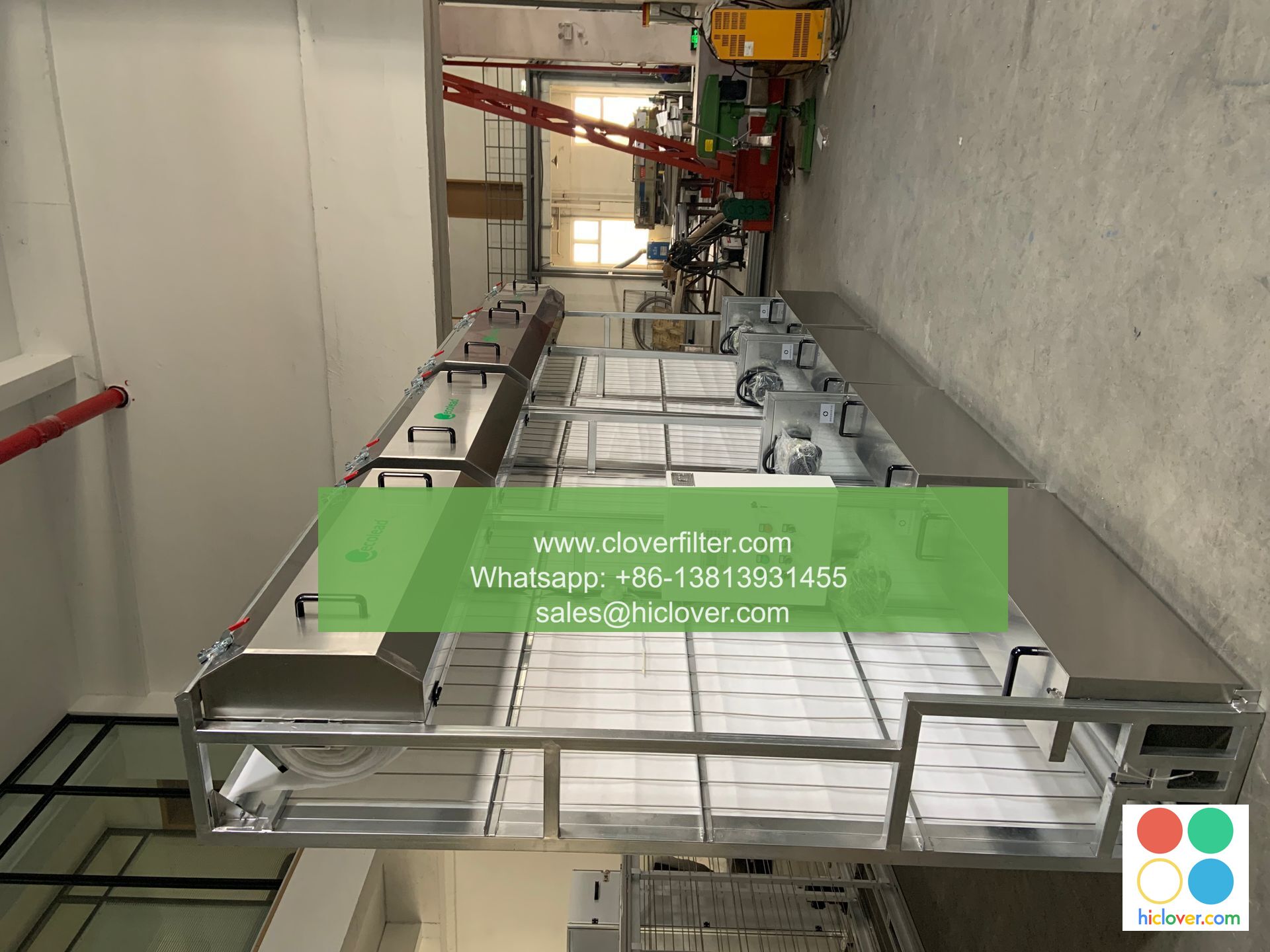
Understanding these aspects will help you determine the most suitable air filtration solutions for your business, including the selection of HEPA filters, activated carbon filters, or other specialized air cleaning technologies.
Choosing the Right Air Filters
The next step is to choose the right air filters for your customized program. This decision should be based on the specific airborne contaminants you need to address, the airflow rates of your HVAC systems, and the filter maintenance requirements. Some key considerations include:

Air filter manufacturers often provide guidance and support in selecting the appropriate filters for specific applications, ensuring that your customized program meets your business’s unique challenges in indoor air quality management.
Implementation and Maintenance
Implementing your customized air filter program involves not only the installation of the selected air filtration systems but also the development of a comprehensive maintenance schedule. Regular filter inspections, cleaning, and replacement are crucial to ensure the continued efficiency and effectiveness of your air filtration solutions. Additionally, air quality monitoring can help in assessing the performance of your program and identifying areas for improvement.
Highlighting Various Application Areas
Customized air filter programs can be applied across a wide range of industries and settings, including:
In each of these application areas, a well-designed customized air filter program can contribute to a healthier indoor environment, reduced absenteeism, increased productivity, and cost savings through energy efficiency and extended equipment lifespan.
Conclusion
Creating a customized air filter program is a tailored approach to addressing the specific air quality challenges faced by your business. By assessing your unique needs, choosing the right air filters, implementing a comprehensive maintenance schedule, and considering various application areas, you can develop a program that not only improves indoor air quality but also supports the overall well-being and success of your business. Remember, a customized air filter program is an investment in the health, safety, and productivity of your employees, as well as the sustainability and efficiency of your operations. It seems like you didn’t provide a question or topic for me to address. Could you please provide more context or clarify what you would like to discuss? I’m here to help with any questions or topics you’d like to explore.
