The Advantages of Using Activated Carbon Air Filters
Key Takeaways:
- Activated carbon filters effectively reduce odors and harmful gases.
- The Automatic Roll Air Filter offers advanced functionality for easy maintenance.
- Suitable for various air filter types including fresh air intakes in HVAC systems.
- Differential pressure triggers enhance performance and efficiency.
- Compliance with industry frameworks like ISO 16890 for filter efficacy.
- Provides significant energy savings and particulate control.
- Designed for optimal use in diverse applications such as data centers and manufacturing facilities.
- Bag Filters: Ideal for larger particles and longer service life.
- Panel Filters: Suitable for low to moderate airflow applications.
- V-Bank Filters: Designed for high-efficiency particulate control with a compact design.
- Automatic Roll Filters: Best for settings requiring constant performance with minimal maintenance.
- Airflow Range:Determine the specific airflow needs of your facility.
- Face Velocity:Consider the velocity of air moving through the filter for optimal efficiency.
- Media Width/Length:Ensure the media dimensions fit your existing system.
- Frame Size:Should be compatible with your HVAC system architecture.
- Control Options:Explore available digital and programmable settings.
- Power Supply:Confirm power source availability for operation.
- Installation Location:Identify appropriate placements such as fresh air intakes and return ducts.
- Ignoring Airflow Requirements: Always calculate the required airflow for your specific application.
- Underestimating Pressure Drops: Account for potential pressure drops to avoid system strain.
- Choosing Incorrect Sizes: Ensure the filter dimensions match vent openings.
- Neglecting Maintenance: Schedule regular inspections even for automatic systems.
- Using Filters Too Long: Change filters as needed based on performance metrics.
- Failing to Consider Media Type: Select the right media for your specific pollutants.
- Overlooking System Compatibility: Confirm that your HVAC system can support the chosen filters.
-
Data Center: A leading tech firm installed CloverFilter’s Automatic Roll Air Filters to maintain stringent air quality needed for sensitive electronics, resulting in improved device performance and reduced energy costs.
-
Battery Factory: A lithium battery manufacturer integrated activated carbon filters into their HVAC system, effectively reducing VOC emissions and ensuring compliance with environmental standards.
-
Paint Shop: An automotive paint booth adopted the Automatic Roll Air Filter to manage paint fumes effectively, enhancing worker safety while lowering operational costs through reduced maintenance.
-
Textile/Steel/Cement Plant: Implementing activated carbon filters in a textile mill contributed to a significant reduction in odor complaints, leading to higher worker satisfaction and productivity levels.

What Are Activated Carbon Air Filters?

Activated carbon air filters are a critical component in air filtration systems, particularly in industrial and commercial settings. They utilize activated carbon to adsorb volatile organic compounds (VOCs), odors, and other harmful gases, making them ideal for environments such as hospitals, data centers, and manufacturing facilities. By employing advanced air filter types, these filters provide an effective solution for managing indoor air quality.
Understanding the Automatic Roll Air Filter
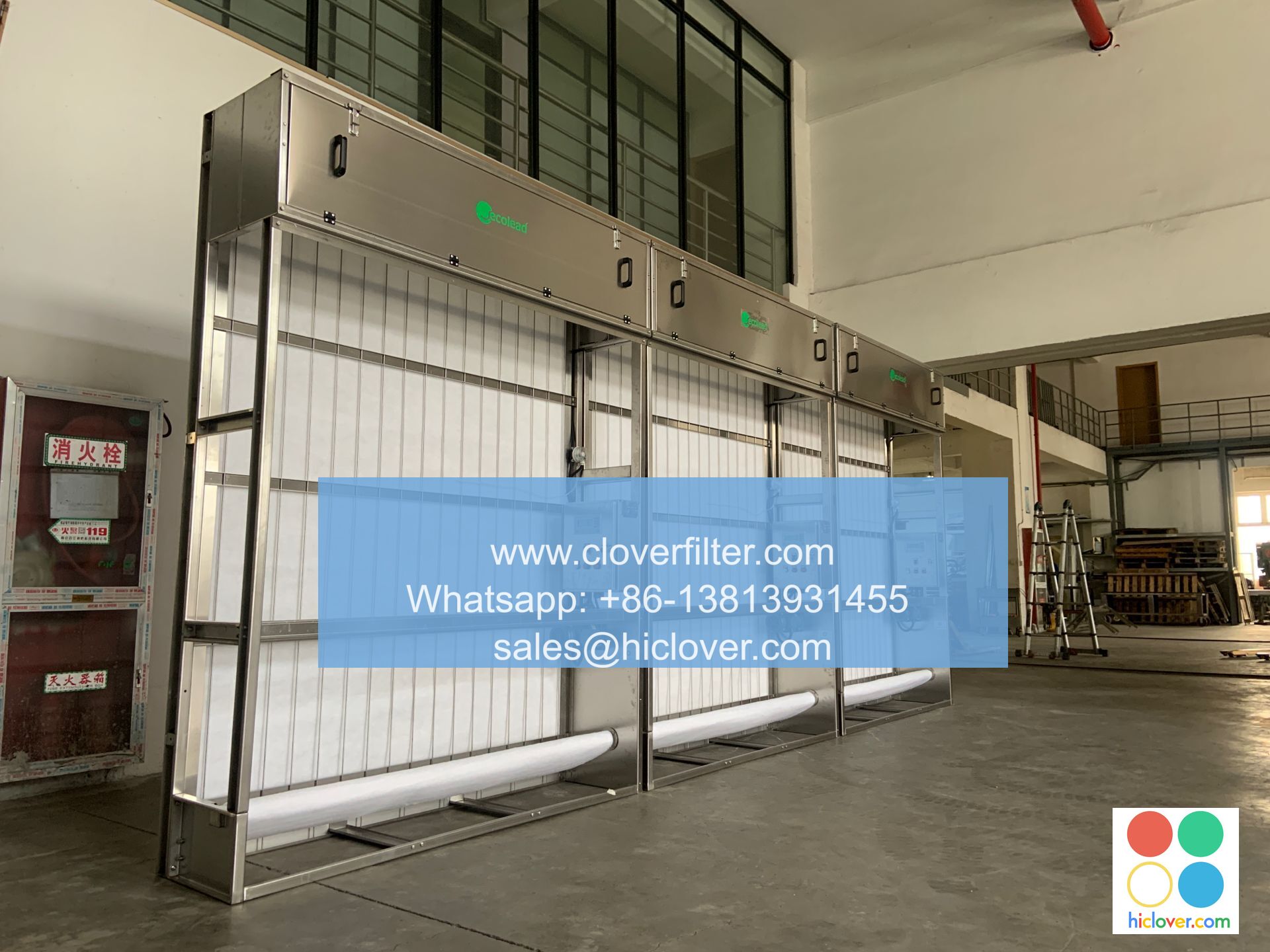
The Automatic Roll Air Filter, a key innovation by CloverFilter, streamlines filtration while minimizing maintenance. This system uses a roll media advance logic, which automatically adjusts the filter media based on differential pressure readings. When pressure increases (indicating a buildup of particulates), the timer mode engages, moving fresh media into place. This operation makes it particularly efficient for HVAC and air handling unit (AHU) systems.
Air Filter Types and Their Applications
Practical Selection Guide
When considering an Automatic Roll Air Filter, several factors must be taken into account:
Comparison of Air Filter Types
| Filter Type | Best Use Case | Maintenance | Pressure Drop Behavior | Operating Cost | Typical Risk/Downside |
|---|---|---|---|---|---|
| Automatic Roll Air Filter | Dynamic environments requiring low maintenance | Minimal, automated media change | Low | Competitive | Initial setup cost |
| Bag Filter | Heavy dust environments | Regular inspection needed | Moderate to high | Moderate | Requires space |
| Panel Filter | Residential and light commercial | Easy to change | Low | Low | Limited particle control |
| V-Bank Filter | High-efficiency needs | More frequent change | Low to moderate | Higher initial investment | Size constraints |
Common Mistakes & How to Avoid Them
Real-World Scenarios
Frequently Asked Questions
What are activated carbon filters best used for?
Activated carbon filters are best for reducing odors, gases, and other volatile organic compounds.
How does the Automatic Roll Air Filter work?
It uses a roll media system that advances automatically based on pressure changes, providing continuous filtration.
Are activated carbon filters expensive to maintain?
The Automatic Roll Air Filter significantly reduces maintenance costs due to its self-advancing media system.
Can these filters meet industry standards?
While they support compliance frameworks such as ISO 16890, specific certifications are available upon request.
How often should activated carbon filters be changed?
The change frequency depends on usage and environmental conditions; automated systems alert users when it’s time.
What settings are best for these filters?
Optimal settings vary by application but focus on airflow requirements and desired particulate control.
Where should activated carbon filters be installed?
They are typically installed in fresh air intakes, return ducts, or processing areas requiring filtration.
What types of contaminants do activated carbon filters target?
These filters target gases, odors, and VOCs, making them suitable for diverse environments.
Meta Description: Discover the advantages of activated carbon air filters, including the innovative Automatic Roll Air Filter by CloverFilter for improved air quality and reduced maintenance costs.
CloverFilter leads the way in advanced air filtration solutions. For tailored assistance, visit CloverFilter’s contact page.
It seems like you may want to provide a prompt for a specific task or topic. Please share what you’re looking for, and I’ll be happy to help!
