Top 5 Energy Efficient Air Filters for Homeowners
Key Takeaways:
- Understanding air filter energy efficiency improves HVAC performance.
- Automatic Roll Air Filters optimize media use for reduced waste.
- Selection criteria include airflow range, frame size, and control options.
- Regular maintenance results in significant cost savings.
- Ideal for various applications like data centers and manufacturing facilities.
- Compliance with ISO standards ensures reliability.
-
Roll Media Advance Logic: As the filter captures dust and particulates, its efficiency decreases. The roll media automatically advances to present a clean surface when a predetermined pressure drop occurs, ensuring constant airflow.
-
Differential Pressure Trigger: Integrated sensors track the pressure difference across the filter. When this differential reaches a certain threshold, the filter begins to advance, extending its usable life and maintaining energy efficiency.
-
Timer Mode: In addition to pressure triggers, a timer can be set to advance the filter at regular intervals, further ensuring optimal operation.
-
Airflow Range: Ensure the filter can handle the necessary volumetric airflow for your specific application (e.g., data centers vs. paint booths).
-
Face Velocity: Select a face velocity that works with your system, typically ranging from 2 to 7 feet per minute (fpm), based on air quality needs.
-
Media Width/Length: Match the dimensions of the roll media to your HVAC/AHU system to ensure compatibility.
-
Frame Size: Verify the frame dimensions to fit into your existing system.
-
Control Options: Assess whether you need manual or automatic controls for filter advancement.
-
Power Supply: Confirm your facility’s power supply accommodates the filter’s requirements.
-
Installation Location: Determine whether the filter will be placed at fresh air intake, return, or process locations for optimal performance.
-
Neglecting Specifications: Always review the manufacturer’s specs; improper selections can increase costs.
-
Ignoring Maintenance Needs: Regular checks prolong filter life and improve efficiency.
-
Forgetting Airflow Requirements: Ensure your filter meets the specific airflow needs of the application.
-
Failing to Monitor Pressure Drop: Regularly check differential pressure to optimize performance.
-
Inadequate Installation: Ensure filters are properly sealed to prevent bypass, which can lead to inefficiencies.
-
Wrong Filter Location: Installing filters in the wrong location can hinder system performance.
-
Overlooking Compliance Standards: Familiarize yourself with ISO and MERV guidelines to ensure the best fit for regulatory needs.
-
Data Center:
In a data center with significant computer equipment producing heat, the Automatic Roll Air Filter’s energy efficiency ensures consistent cooling while minimizing downtime for filter changes. The low-pressure drop feature maintains optimal airflow, which is crucial for server operation. -
Battery Factory:
A lithium battery manufacturing facility benefited from the roll filter’s ability to control particulate matter, crucial for the sensitive processes involved. The automated media advancement provided energy savings by prolonging filter use periods. -
Paint Shop:
Air filter energy efficiency is vital in paint booths to manage volatile organic compounds (VOCs) and particulates. The Automatic Roll Air Filter helped to minimize odor and hazardous emissions, while maintaining a clean workspace. -
Textile/Steel/Cement Plant:
In a textile mill, the use of an Automatic Roll Air Filter decreased maintenance costs significantly, while ensuring compliance with workplace safety by consistently capturing lint and other airborne particulates.

What is an Automatic Roll Air Filter?
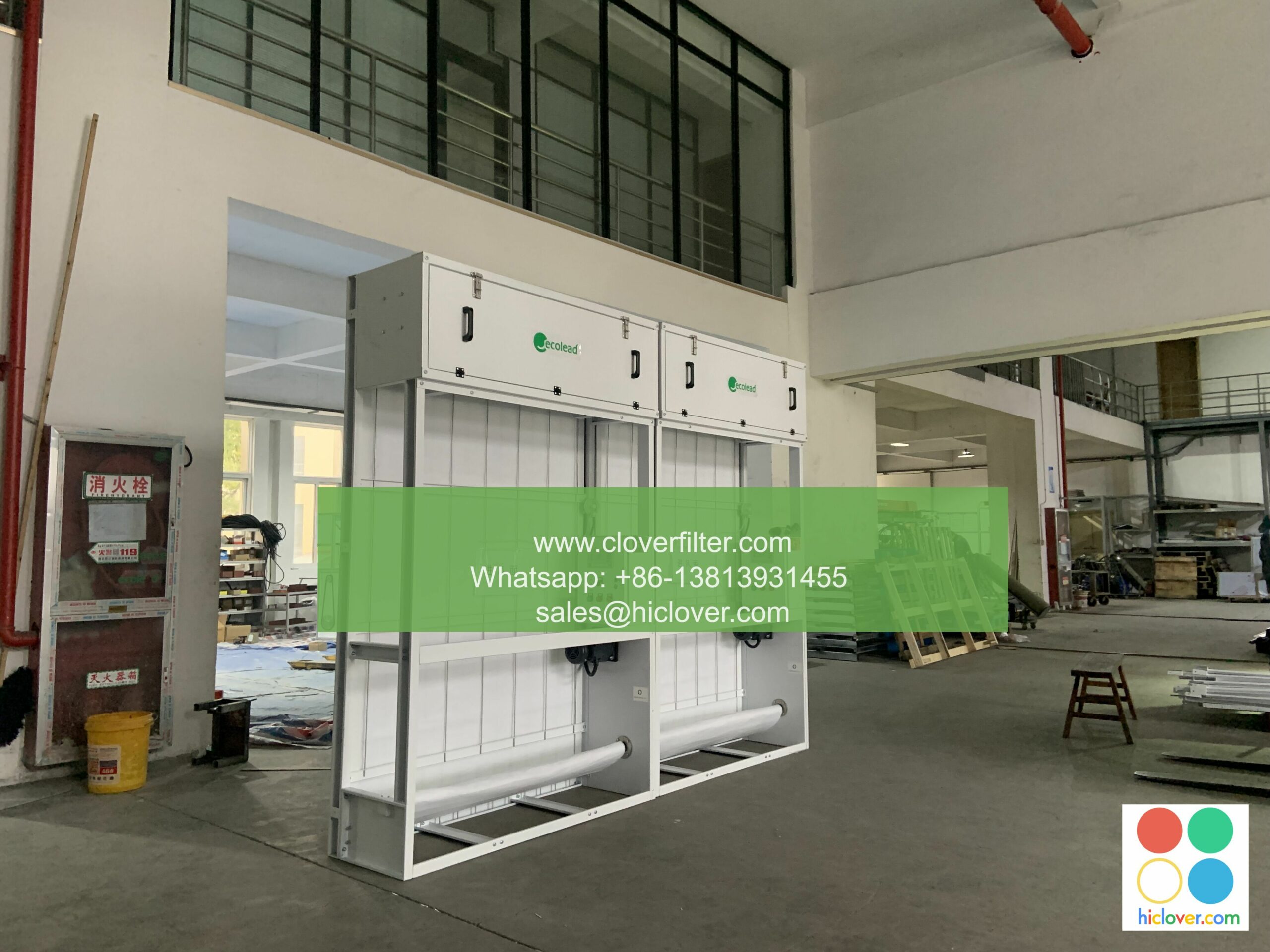
An Automatic Roll Air Filter is a cutting-edge air filtration system designed to enhance air filter energy efficiency in HVAC systems. These filters use roll media that automatically advances when the filter becomes dirty, triggered by differential pressure sensors. This means that only the contaminated portion of the filter is replaced, minimizing waste and ensuring consistent performance.

The roll filter system is particularly effective in locations that require robust filtration, such as large commercial HVAC systems, data centers, and manufacturing plants. By maintaining optimal airflow, these filters contribute to better indoor air quality and reduced operational costs.
How Automatic Roll Air Filters Work
Automatic Roll Air Filters operate through a combination of roll media advance logic, differential pressure triggers, and timer modes. Here’s how it works:
These mechanisms simplify maintenance and reduce downtime, thereby enhancing air filtration performance in critical environments.
Practical Selection Guide
When choosing an air filter for your application, consider the following criteria:
Comparison Table
| Feature | Automatic Roll Air Filter | Bag Filter | Panel Filter | V-bank Filter |
|---|---|---|---|---|
| Best Use Case | HVAC systems with varying loads | General industrial | Residential/commercial | Heavy particulate environments |
| Maintenance | Low (automatic advancement) | Moderate (manual replacement) | Low (periodic checks) | High (frequent changeouts) |
| Pressure Drop Behavior | Relatively low, maintains efficiency | Moderate (builds over time) | Low (steady) | Moderate (can increase) |
| Operating Cost | Low (energy savings expand filter life) | Moderate | Low | High |
| Typical Risk/Downside | Complexity in initial setup | Limited airflow | Not suitable for high dust | High air resistance |
Common Mistakes & How to Avoid Them
Real-World Scenarios
FAQ Section
What is air filter energy efficiency?
Air filter energy efficiency refers to the filter’s capacity to perform effectively in cleaning the air while consuming minimal energy, ultimately reducing operational costs.
How do I determine the right filter for my HVAC system?
Consider airflow capacity, required filtration efficiency, and maintenance capabilities. Consulting with a trusted supplier, like CloverFilter, can help.
Are Automatic Roll Air Filters suitable for all environments?
While they excel in variable-load environments like data centers, it’s essential to assess application needs before selection.
What maintenance is required for Automatic Roll Air Filters?
These filters require minimal maintenance due to their automatic advance feature, but periodic inspections are recommended.
How do I know when to replace my air filter?
Monitoring pressure drop indicators or using a timer system will help determine the right intervals for filter advancements or replacements.
Can I integrate an Automatic Roll Air Filter into my existing system?
Yes, CloverFilter systems are designed for easy integration with most HVAC setups, maximizing efficiency with minimal modifications.
Meta Description: Discover the top 5 energy-efficient air filters for homeowners and learn how an Automatic Roll Air Filter can enhance air quality and reduce costs.
For a practical conversation about air filter energy efficiency and finding the right solutions for your facility, reach out to CloverFilter today at CloverFilter Contact Page.
It seems like you’re looking for a prompt, but I need a bit more context to provide you with something suitable. Are you looking for a writing prompt, a creative idea, or something else entirely? Please provide more details so I can assist you better!
