Air Filter Terms of Use: Protecting Your Investment
Key Takeaways:
- Understanding air filter terms of use is essential for maximizing equipment lifespan.
- An Automatic Roll Air Filter simplifies maintenance and reduces energy costs.
- Proper selection criteria include airflow range, media width, and installation location.
- Regularly monitoring differential pressure can enhance filter performance.
- Adhering to standards like ISO 16890 ensures compliance and quality in filtration.
- Avoiding common mistakes can prolong the life of your filtration systems.
-
Roll Media Advance Logic: The filter fabric is wound in rolls, allowing for progressive advancement as contaminants accumulate. Once a preset pressure differential is reached, the system automatically progresses to a fresh section of media.
-
Differential Pressure Trigger: This feature monitors the filter’s performance. When the resistance exceeds operational thresholds, it signals the need to advance the roll, ensuring optimal airflow and minimizing operating costs.
-
Timer Mode: In conjunction with the differential pressure monitoring, timer settings can preemptively roll the media based on estimated usage or application needs, providing additional layers of reliability.
- Airflow Range: Determine the volume of air needing filtration; this guides the size and type of filter required.
- Face Velocity: This metric impacts efficiency and pressure drop. Choose a filter with an appropriate face velocity according to your HVAC design.
- Media Width/Length: Roll filters come in various dimensions. Ensure compatibility with your existing systems.
- Frame Size: Frame specifications should match the architectural setup to guarantee a snug fit, preventing air bypass.
- Control Options: Advanced automatic models offer digital controls, enhancing monitoring and maintenance capabilities.
- Power Supply: Assess the electrical capacity available; some filters may require higher voltage for advanced functionalities.
- Installation Location: Filters can be installed in fresh air intake, return, or process lines. Determine the optimal placement based on airflow dynamics.
- Ignoring the filter’s airflow rating, leading to inadequate filtration.
- Overlooking the importance of regular differential pressure checks.
- Failing to match the media width to frame specifications, causing inefficiencies.
- Neglecting maintenance alerts, which can lead to costly downtime.
- Misjudging the impact of environmental conditions on filter performance.
- Choosing the wrong installation location, resulting in air bypass.
- Underestimating the role of pre-filters, which can significantly extend filter life.
- Relying solely on visual inspections rather than system performance data.
- Overlooking installation guidelines set by manufacturers, especially with compatibility.
- Not considering future scalability during the initial selection process.
-
Data Center: A major data center upgraded to an Automatic Roll Air Filter system to ensure the continuous flow of clean air. This investment reduced energy consumption by improving airflow efficiency while managing heat loads effectively.
-
Battery Factory: A lithium battery plant adopted CloverFilter solutions to control particulate contamination. The Automatic Roll Air Filter effectively captured harmful particles, ensuring safety and product quality while simplifying maintenance protocols.
-
Paint Shop: In a large automotive paint shop, using roll filters allowed for better particulate control, reducing the risk of defects in paint jobs. The automated system ensured consistent air quality, leading to improved productivity.
-
Textile/Steel/Cement Plant: The installation of Automatic Roll Air Filters in a steel manufacturing facility minimized dust exposure for workers, promoting a healthier environment. A similar application in a cement plant optimized performance by lowering filter change frequencies.

What is an Automatic Roll Air Filter?
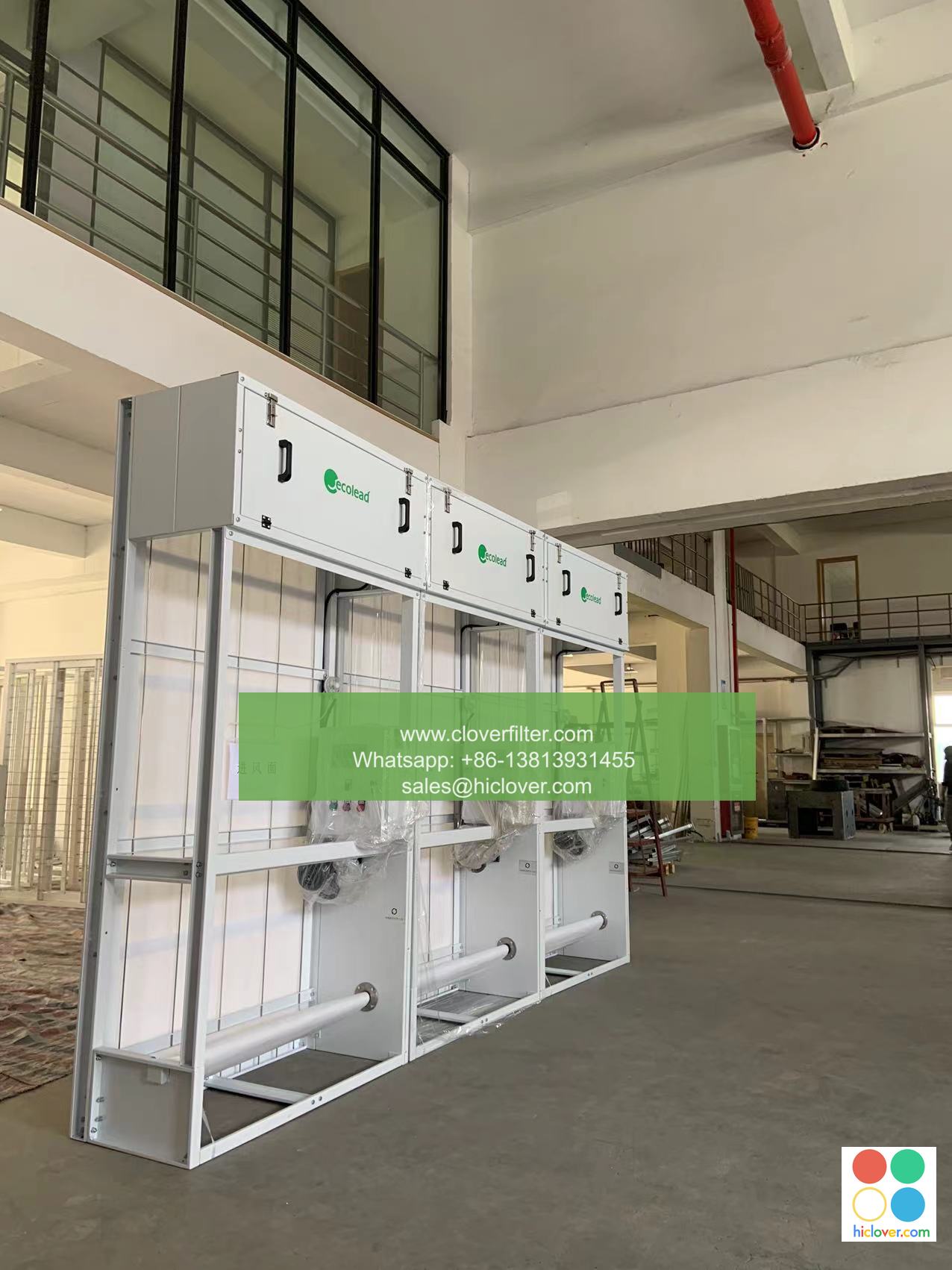
An Automatic Roll Air Filter is an advanced filtration solution designed for HVAC systems, encompassing various industrial sectors where air quality is paramount. Utilizing a continuous roll media, these filters automatically advance as they collect particulate matter, simplifying the maintenance process. Triggered by a differential pressure sensor, the roll media shifts to ensure that clean air is consistently delivered while minimizing energy consumption.

In HVAC systems, particularly Air Handling Units (AHUs), the Automatic Roll Air Filter plays a crucial role in removing contaminants before fresh air intake, acting as a robust AHU prefilter. By efficiently capturing dust, pollen, and other particles, it safeguards the equipment and improves the overall air quality within buildings.
How Does It Work?
The Automatic Roll Air Filter operates on advanced technology that integrates roll media advance logic, differential pressure triggers, and timer modes:
Practical Selection Guide for Automatic Roll Air Filters
When selecting an Automatic Roll Air Filter, consider the following parameters to meet your specific operational requirements:
Comparison of Filter Types
| Feature | Automatic Roll Air Filter | Bag Filter | Panel Filter | V-bank Filter |
|---|---|---|---|---|
| Best Use Case | High airflow environments | General applications | Space-constrained areas | Demanding filtration needs |
| Maintenance | Low, automated advance | Moderate, manual changing | Regular, manual changing | Requires periodic upkeep |
| Pressure Drop Behavior | Minimal with proper use | Moderate to high | Generally low | Moderate to high |
| Operating Cost | Energy efficient | Higher due to changes | Low operational cost | Moderate |
| Typical Risk/Downside | Complexity might cause issues if not monitored | Less efficient air quality control | Limited filtration capabilities | May clog in humid conditions |
Common Mistakes & How to Avoid Them
Real-World Scenarios
Compliance and Standards
While CloverFilter products are built to high-quality standards, it is essential to remember that certifications like ISO 16890 or the MERV framework serve as industry benchmarks. However, specific certifications can vary, so it is advisable to request documentation directly for compliance verification.
FAQs
Q1: What is the lifespan of an Automatic Roll Air Filter?
A1: Lifespan varies based on usage and environmental factors. Regular monitoring is critical for maximizing efficiency.
Q2: How often should I monitor differential pressure?
A2: It is recommended to check differential pressure monthly or as specified by the manufacturer.
Q3: Can the Automatic Roll Air Filter be used in all HVAC systems?
A3: Its versatility allows for use in various applications, but always verify compatibility with specific systems.
Q4: Is installation complex?
A4: While installation is straightforward, it’s best performed by qualified personnel to ensure correct operation and performance.
Q5: How do I know if I need to replace my filter?
A5: Monitor the pressure drop and check for maintenance indicators; consult the user manual for specific criteria.
Q6: Can these filters help reduce energy costs?
A6: Yes, proper filtration and reduced pressure drop optimize the system’s energy usage.
Meta Description: Discover how understanding air filter terms of use can maximize your investment in Automatic Roll Air Filters. Learn essential selection and maintenance tips today.
Investing in quality air filtration systems is pivotal for efficient operations. For detailed consultations about the Automatic Roll Air Filter and optimizing your facility’s performance, reach out to CloverFilter at CloverFilter Contact.
It seems like your message might be incomplete. Could you please provide more details or clarify what you’re looking for? Whether it’s a writing prompt, a question, or something else entirely, I’m here to help!
