Air Filter Efficiency: How to Measure and Test Effectiveness
Key Takeaways
- Understanding air filter testing is crucial for HVAC efficiency.
- Automatic Roll Air Filters provide advanced roll media technology for better filtration.
- Regular maintenance and precise selection improve filter performance.
- Compliance with standards like ISO 16890 helps ensure effective filtration.
- Choosing the right filter depends on application-specific needs and airflow requirements.
-
Pressure Drop Measurement: Monitoring the pressure drop across the filter helps understand when it is becoming clogged. Increased pressure drop signifies diminished airflow, which could lead to excessive energy consumption.
-
Particulate Sampling: Collecting and analyzing air samples before and after filtration provides insights into the filtration efficiency. This method can help validate the MERV rating or performance based on ISO 16890 standards.
-
Airflow Balance Testing: Evaluating airflow rates ensures that the system is balanced, which contributes to overall air quality and HVAC system efficiency.
-
Visual Inspection: Regular visual checks for dust accumulation can offer immediate insights into the filter’s condition.
- ISO 16890 (for particulate filtration).
- EN 779 (legacy standard for MERV-like classifications).
-
Airflow Range: Understand the volume of air that needs to be filtered. Ensure that you select an automatic filter that accommodates your system’s requirements.
-
Face Velocity: Determine the face velocity to assess how quickly air passes through the filter. This parameter can significantly impact filter lifespan and performance.
-
Media Width/Length: The dimensions of the filter media should fit your existing installation space while maintaining filtration efficiency.
-
Frame Size: A proper frame size ensures that the filter sits securely in the ductwork, preventing air bypass.
-
Control Options: Choose a control mechanism that allows for real-time monitoring and replacement alerts.
-
Power Supply: Ensure that compatible power supply options are available for the filter’s operation.
-
Installation Location: Consider where the filter will be placed—whether in the fresh air intake, return air, or process air settings—affecting overall filtration efficacy.
- Failing to monitor pressure drop regularly.
- Choosing a filter based solely on initial cost rather than long-term efficiency.
- Overlooked maintenance scheduling on automatic filters.
- Ignoring compatibility with the HVAC system specifications.
- Using filters outside their recommended airflow range.
- Neglecting to assess real-world performance through sampling.
- Skipping compliance checks with industry standards like ISO 16890.
-
Data Centers: In facilities with sensitive equipment, Automatic Roll Air Filters are critical for maintaining air quality and protecting critical components. These filters reduce maintenance time while ensuring optimal airflow.
-
Lithium Battery Factory: The need for substantial particulate control in battery manufacturing necessitates filters that can operate under higher loads without compromising performance. Using CloverFilter’s Automatic Roll Air Filter enhances the cleanliness of the air without increasing operational costs.
-
Paint Shop: High levels of particulates from chemicals can affect product quality. Here, the efficiency of air filter testing ensures that the air remains clean while reducing overspray and improving paint adhesion, positively impacting operations.
-
Textile/Steel/Cement Plants: These industries often deal with heavy dust loads. Utilizing Automatic Roll Air Filters from CloverFilter allows for consistent airflow and fewer interruptions for filter changes, leading to better overall productivity.

What Is an Automatic Roll Air Filter?
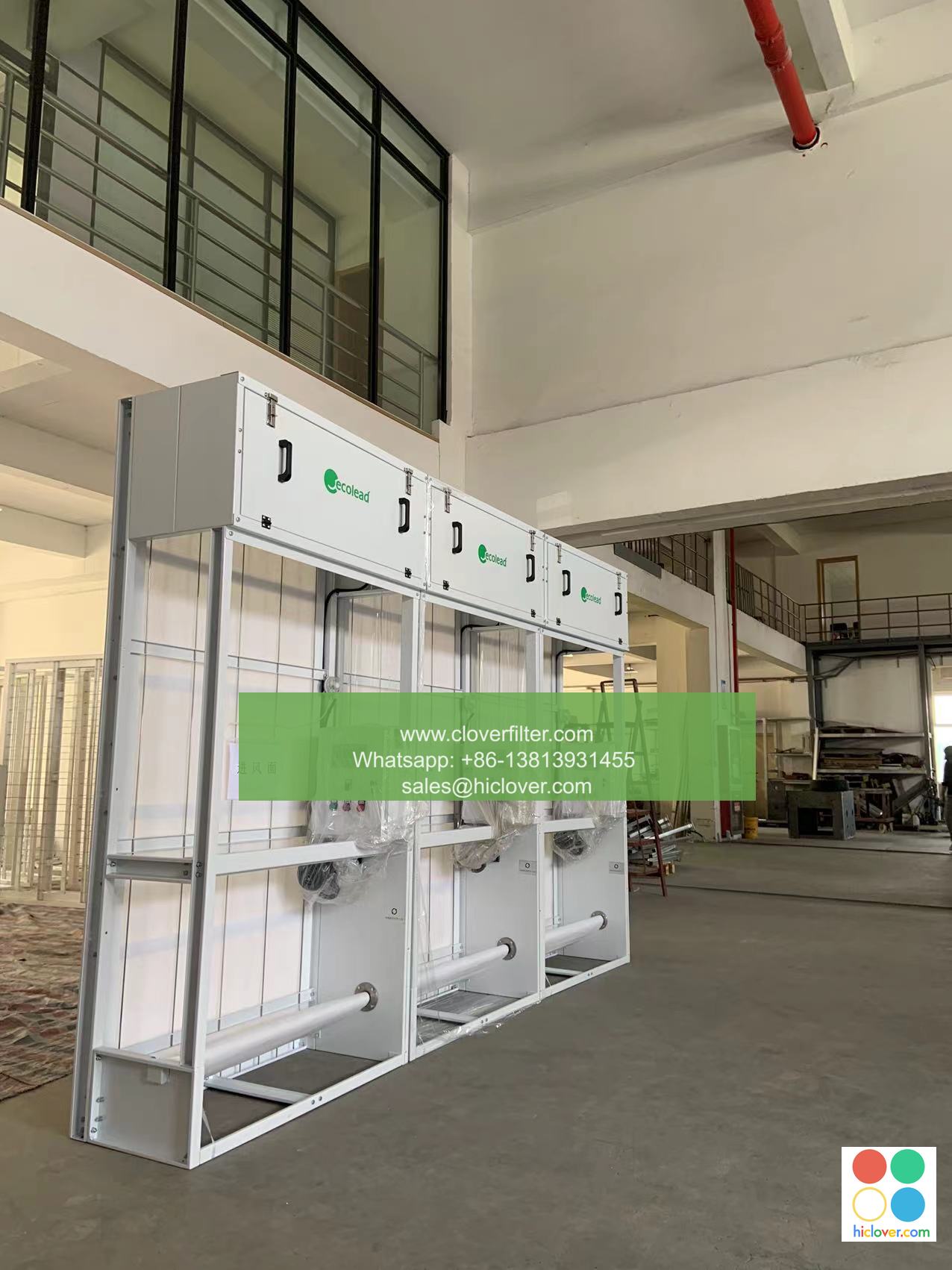
An Automatic Roll Air Filter is a cutting-edge filtration solution designed for HVAC and air handling units (AHUs). Unlike traditional filters, it employs a roll media advance logic system, using a continuous roll of filter media that automatically adjusts as it captures contaminants. With a differential pressure trigger, the filter activates a timer mode that prompts the media to advance, ensuring consistent airflow and peak performance without significant manual intervention.
These filters are ideally placed in various applications, from fresh air intake systems to return ducts, providing stable particulate control and maintenance reduction. The automatic feature reduces time spent on filter changes, enabling facility managers and HVAC engineers to focus on other critical tasks.

How to Measure Air Filter Testing Effectiveness
Air filter testing is essential for assessing the performance of filtration systems. Here are various approaches to measure effectiveness:
Common Air Filter Testing Methods
Each method serves a unique purpose in ensuring a robust filtration strategy.
Selection Guide for Automatic Roll Air Filters
Choosing the right Automatic Roll Air Filter involves several crucial considerations:
Comparison Table: Automatic Roll Air Filter vs. Other Filters
| Filter Type | Best Use Case | Maintenance | Pressure Drop Behavior | Operating Cost | Typical Risk/Downside |
|---|---|---|---|---|---|
| Automatic Roll Air Filter | High-volume air systems | Low, due to automation | Steady | Medium | Potential device failure due to automation |
| Bag Filter | Industrial applications | Moderate | Initial high, then gradual | Low | Occasional clogging requiring manual checks |
| Panel Filter | HVAC systems with low airflow needs | High, frequent replacements | High and steady | Medium | Limited capacity for particle retention |
| V-bank Filter | Pre-filtration for high-efficiency setups | Moderate to high | Similar to filters, varies with conditions | Low to medium | Requires precise installation and positioning |
Common Mistakes & How to Avoid Them
To maximize the effectiveness of air filter testing and application, avoid these common pitfalls:
Real-World Scenarios
Conclusion
Selecting the right air filter and understanding the effectiveness of air filter testing is essential for any facility manager or HVAC engineer. The Automatic Roll Air Filter from CloverFilter represents a significant advancement in filtration technology, ensuring efficiency and sustainability across various applications.
For more tailored insights and product recommendations, feel free to visit CloverFilter, or contact us to discuss your specific needs and improve your air filtration systems.
Meta Description: Discover effective ways to measure air filter efficiency and explore how CloverFilter’s Automatic Roll Air Filter enhances air quality across various industries.
For expert advice and product information, reach out to CloverFilter at CloverFilter Contact.
Sure! What kind of prompt are you looking for? Are you interested in a writing prompt, a creative idea, or something else? Let me know how I can assist you!
