Air Purifiers vs. Air Filters: Understanding the Differences
Key Takeaways:
- Air filters are essential for particulate control in HVAC systems.
- Automatic Roll Air Filters reduce maintenance frequency and energy consumption.
- Different air filter applications cater to various industrial needs.
- Understanding the airflow range and pressure drop is vital for effective selection.
- Compliance with ISO standards ensures quality and performance benchmarks.
- Airflow Range: Ensure the filter matches the facility’s airflow requirements.
- Face Velocity: Select a filter that can manage the intended face velocity without compromising performance.
- Media Width/Length: The dimensions should fit seamlessly into your existing system.
- Frame Size: Ensure compatibility with the AHU structure.
- Control Options: Look for filters with advanced monitoring features for optimal operation.
- Power Supply: Confirm that the power supply aligns with your current infrastructure.
- Installation Location: Determine if it will be integrated into the fresh air intake, return air ducts, or processing environments.
- Ignoring System Compatibility: Always ensure filters match the existing HVAC setup.
- Overlooking Airflow Requirements: Select filters that maintain adequate airflow.
- Neglecting Maintenance Schedules: Develop a routine to avoid system inefficiencies.
- Forgetting to Monitor Pressure Drop: Regularly check differential pressure indicators.
- Choosing Filters Based on Cost Alone: Assess long-term performance over initial savings.
- Underestimating Environmental Conditions: Consider humidity and particulate levels specific to your industry.
- Failing to Train Staff: Educate facilities personnel about filter systems and maintenance.
- Not Consulting Experts: Seek advice when making significant investments in filtration technology.
-
Data Center: A large data center incorporated CloverFilter’s Automatic Roll Air Filter to minimize dust and particulates. This change resulted in lower cooling costs and extended equipment lifespans.
-
Battery Factory: In a lithium battery production facility, the integration of an Automatic Roll Air Filter reduced maintenance downtime and improved air quality, ensuring compliance with industry standards.
-
Paint Shop: A paint shop transitioned to the Automatic Roll Air Filter to control volatile organic compounds (VOCs) and particles effectively, leading to a marked improvement in worker safety and product quality.
-
Textile/Steel/Cement Plants: These industries experienced significant reductions in particulate matter with CloverFilter products, increasing operational reliability while adhering to environmental regulations.

Understanding Air Purifiers and Air Filters
When it comes to maintaining clean air in industrial environments, two key components often come into play: air purifiers and air filters. While both aim to enhance air quality, the tools rely on different strategies to achieve this. Air purifiers are generally standalone devices designed to remove pollutants from the air, often incorporating technologies such as HEPA filters or UV light. On the other hand, air filters are typically integrated into HVAC systems, focusing on air filter applications that enhance the efficiency of air handling units (AHUs) and ensure clean air in workspaces.

What is an Automatic Roll Air Filter?
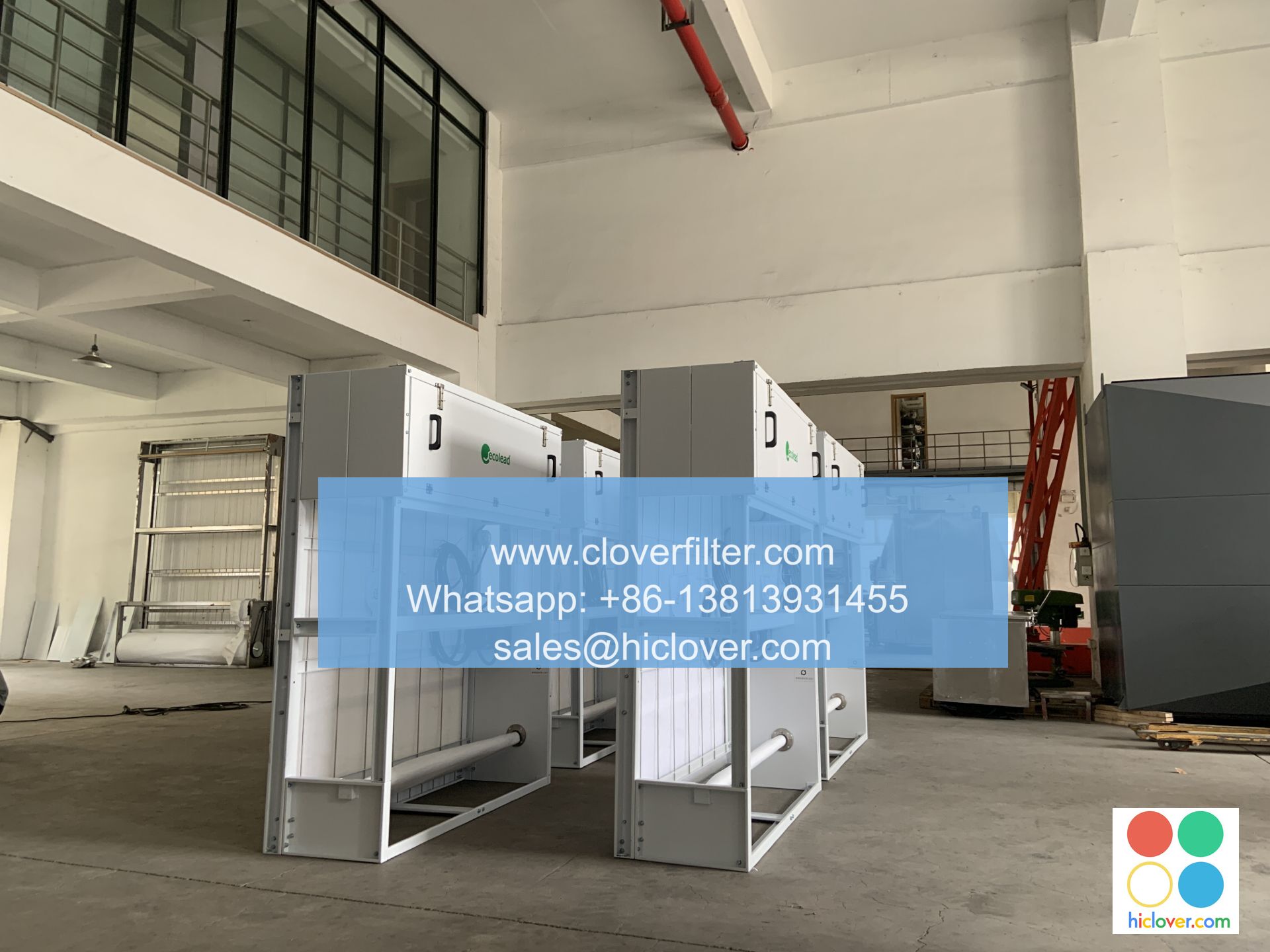
An Automatic Roll Air Filter is an innovative and efficient solution specifically designed for industrial HVAC systems. This type of filter utilizes roll media that advances automatically, ensuring a continuous supply of clean air with minimal maintenance. The roll media advance logic ensures that the filter operates efficiently, and the differential pressure trigger alerts users when a change in resistance occurs, prompting a filter change. Additionally, the timer mode can be programmed for regular maintenance cycles, guaranteeing that the facility benefits from a consistently high level of air quality.
Benefits of Automatic Roll Filters in HVAC Systems
Integrating an Automatic Roll Air Filter into HVAC or AHU systems allows for exceptional efficiency and effectiveness. The design minimizes pressure drops, making them ideal for applications requiring continuous airflow, such as fresh air intake or processing areas. Furthermore, the filter’s ability to extend filter life significantly reduces maintenance requirements and labor costs while simultaneously saving energy.
Selecting the Right Automatic Roll Air Filter
When it comes to choosing an Automatic Roll Air Filter, several factors must be considered:
Comparison Table: Automatic Roll Air Filter vs. Other Filter Types
| Filter Type | Best Use Case | Maintenance | Pressure Drop Behavior | Operating Cost | Typical Risk/Downside |
|---|---|---|---|---|---|
| Automatic Roll Air Filter | High-volume industrial applications | Low | Low | Moderate | Initial investment might be higher |
| Bag Filter | General industrial usage | Moderate | Moderate | Low | Space requirements may be significant |
| Panel Filter | Small HVAC systems | High | High | Low | Frequent replacements needed |
| V-bank | High-efficiency needs | Moderate | Moderate | Moderate | May require complex installations |
Common Mistakes & How to Avoid Them
Real-World Scenarios
Compliance and Standards
While choosing air filtration systems, it’s crucial to understand the level of compliance with industry standards. The ISO 16890 and legacy EN 779, as well as MERV concepts, serve as general guidelines for evaluating filter performance, but specific certifications should be confirmed as “available on request.”
When integrating an Automatic Roll Air Filter from CloverFilter, procurement managers and facility engineers can be assured of expert guidance and high-quality filtration solutions tailored to their specific air filter applications.
To learn more about optimizing air filtration in your industrial application, contact CloverFilter at CloverFilter.
Meta Description: Discover key differences between air purifiers and air filters, with insights into Automatic Roll Air Filter applications and selection guide for industrial needs.
It looks like your message is incomplete. Could you please provide more details or clarify what you need? Whether it’s a writing prompt, a question, or something else, I’m here to help!
