Automatic Roll Air Filters in Mexico’s Industrial Production
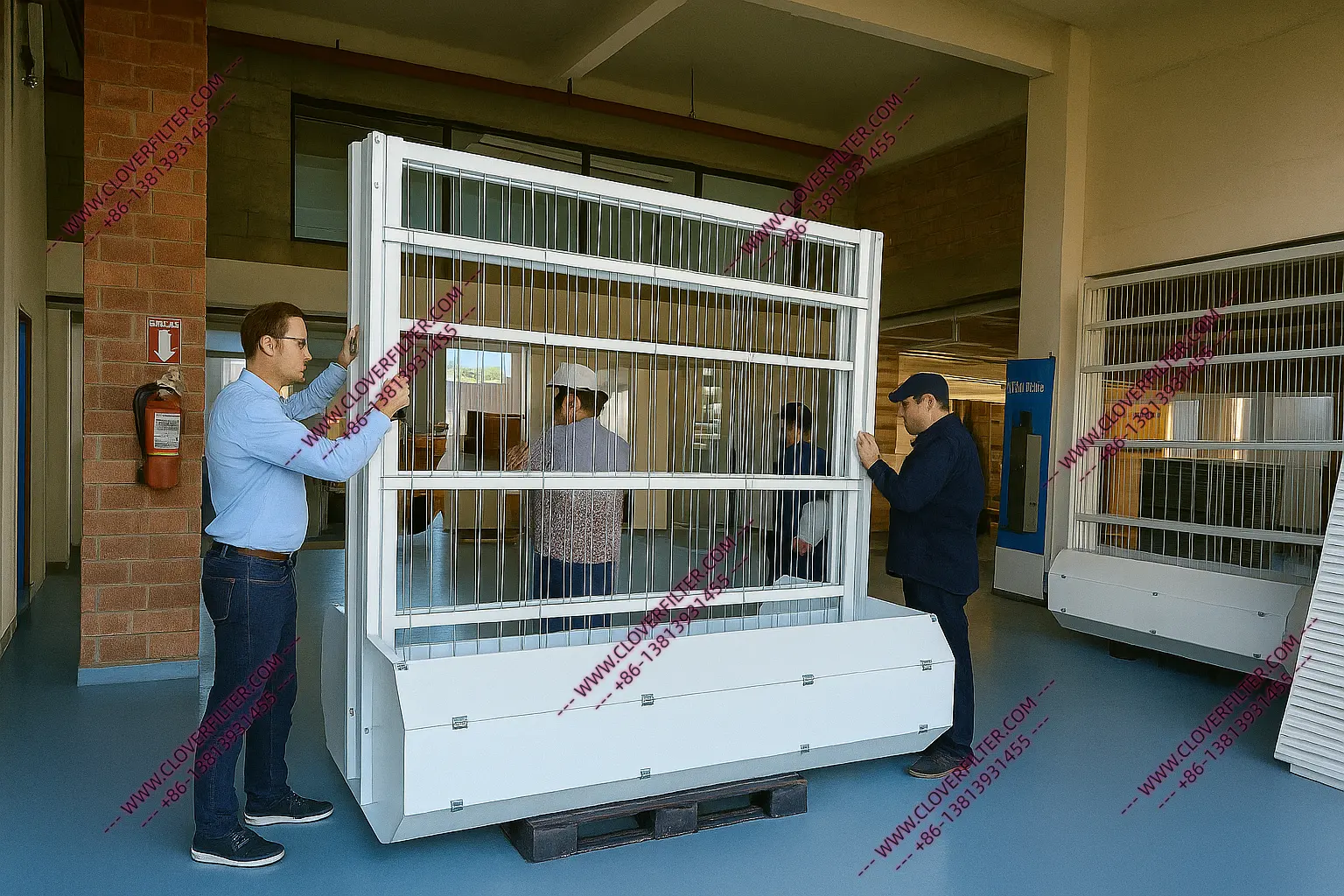
Automatic Roll Air Filters in Mexico’s Industrial Production
Automatic roll (continuous) air filters are specialized HVAC filtration systems used in industrial environments. They work by feeding a long roll of filter media through an air intake and automatically advancing the roll when the active section becomes dirty. This design ensures a continuous supply of clean filter surface, minimizing manual maintenance and downtime. In practice, these systems capture dust, paint overspray, chemical fumes, and other contaminants, making them ideal for high-volume manufacturing contexts.
How Automatic Roll Air Filters Work
Automatic roll filter units include a motorized roll, a take-up spool, and control sensors. As air flows through, particulates get trapped on the filter media. A built-in differential pressure sensor or timer triggers the motor to advance the filter roll when the loaded section reaches a set resistance. This action automatically winds the used media onto a spool and exposes a fresh filter surface. Key operational features include a continuous media supply for uninterrupted filtration, automated advance via motor control, and minimal need for manual intervention.
Industry Context and Adoption in Mexico
Mexico is one of the world’s leading manufacturing hubs, with especially large automotive and electronics sectors. The country produces on the order of four million vehicles annually (ranking among the top producers globally) and exports the majority of its output. Electronics manufacturing (consumer electronics, medical devices, etc.) is also extensive, and national initiatives like “Plan Mexico 2030” aim to expand domestic semiconductor assembly and battery production. These industries require stringent air quality control to meet global standards. Key trends include: – Automotive boom: Mexico’s auto sector has grown rapidly, with major assembly plants in Guanajuato, Puebla, Aguascalientes, Coahuila, and other states. These plants invest in advanced air quality controls to ensure paint and assembly quality.
– EV and battery growth: New electric vehicle production and lithium-ion battery assembly plants (for example, in Puebla, San Luis Potosí, and Chihuahua) are being built. These facilities handle powdery and chemical materials that demand high-efficiency filtration.
– Electronics expansion: Global electronics and semiconductor companies have facilities in regions like Baja California, Nuevo León, and Querétaro. Clean, static-free air is critical in circuit board and chip packaging lines.
– Regulatory push: Mexican official standards (NOMs) and environmental rules increasingly emphasize worker safety and emissions control. Industries adopt better filtration to comply with these requirements.
– Industry 4.0 integration: Modern factories increasingly use digital controls and IoT monitoring. Automated roll filters with PLC-based control systems fit this trend, providing real-time status and remote management.
Applications in Automotive Manufacturing
In Mexican automotive plants, automatic roll air filters are widely used in body shops, paint booths, and assembly halls. These systems provide high-capacity filtration that meets the demanding cleanliness requirements of modern car production. Typical applications include:
– Paint booths and body shops: These filters capture paint overspray, solvent mists, and fine dust before it can contaminate car body surfaces. Maintaining ultra-clean intake air in painting areas is vital for defect-free finishes and consistent paint adhesion.
– Prep and sanding areas: Welding fumes and metal dust from body preparation are filtered out, protecting both workers and paint quality. This clean environment reduces costly rework due to contamination.
– Pressurization and HVAC intakes: Roll filters often serve as high-capacity pre-filters at the main air intake or dedicated booth doors. They remove large particles and protect downstream HEPA or final filters, extending filter life.
– Robotic and automated lines: In robotic painting or sealing stations, stable airflow and pressure are needed to keep machines accurate and prevent overspray drift. Automatic filters ensure continuous operation without manual filter changes.
– 24/7 operation: Automotive factories in Mexico often run around the clock. The automated roll can be advanced without stopping production, greatly reducing downtime compared to manual filter replacement.
– Corrosion resistance: Many plants are in humid or coastal areas (e.g. Veracruz, Coahuila). Roll filter units are often built with corrosion-resistant housings and media to withstand solvents and moisture.

Battery and Electric Vehicle Production
Battery manufacturing (both lithium-ion and lead-acid) is a growing industry in Mexico, tied to the rise of electric vehicles. These facilities handle extremely dusty and corrosive materials, making advanced air filtration essential. Battery plants generate heavy concentrations of fine dust and chemical vapors (from lithium salts, graphite, acid, solvents, etc.), requiring strict air control for safety and quality. Automatic roll air filters are used in many areas of battery production, including:
– Electrode mixing and coating: Removing ultrafine carbon, metal, or ceramic dust that arises when mixing active materials or coating electrodes. These particles can be hazardous, so continuous filtration protects workers and sensitive machinery.
– Assembly and formation rooms: During cell stacking, assembly, or formation stages, filters maintain clean-room pressure balance. They ensure that airborne debris (such as metal shavings or packing dust) does not compromise the electrical integrity of cells.
– Chemical handling zones: In areas where acids or organic solvents are present, roll filters help capture mists and entrained droplets. This reduces corrosion risks in ducts and equipment and maintains a safer breathing environment.
– Integration with extraction systems: Roll filters often operate alongside local exhaust ventilation and scrubbers. For example, vents above battery mixers or welding stations may feed into a central filter bank, where an automatic roll unit acts as an effective pre-filter.
Overall, these systems reduce manual maintenance (avoiding worker exposure to toxic dust during filter changes), provide consistent airflow for process stability, and improve energy efficiency by keeping the intake pressure drop low.
Electronics and Semiconductor Assembly
In electronics manufacturing – including circuit board assembly, semiconductor packaging, and component testing – air purity and electrostatic control are critical. Even microscopic dust or fibers can cause short circuits or component failures. To address this, many electronics facilities in Mexico have installed automatic roll air filters to stabilize airflow and pre-clean intake air. These systems help uphold cleanroom standards and reduce electrostatic risk. Key uses include:
– PCB and component assembly lines: Filters capture flux fumes, solder smoke, and particulate debris, protecting fine-pitch solder joints and preventing circuit defects.
– Semiconductor packaging and testing: Mexico’s chip packaging plants use roll filters as pre-filters to maintain cleanroom conditions. They help keep particle counts low before air enters HEPA systems.
– Reflow ovens and soldering stations: These areas produce fumes and fine particulate that are continuously removed, preventing buildup in ventilation ducts and protecting worker health.
– Static control: Filter housings and components are often made with anti-static materials or coatings. Minimizing manual interventions (since the media advances automatically) also reduces the chance of electrostatic discharge.
– Data center and precision HVAC: Large data centers and clean environments use similar pre-filter systems. In new data center facilities in Mexico (e.g. Monterrey, Querétaro), roll pre-filters improve air quality and reduce load on precision filters.
Overall, automatic roll filters help Mexico’s high-tech plants maintain strict clean-air standards (often ISO Class 7–8 or better) without frequent filter swaps. They ensure continuous clean airflow, which is essential for high yields in electronic products.
Renewable Energy and Other Industries
Beyond these main sectors, other industries and large facilities can also benefit from automatic roll air filters. For example:
– Solar panel manufacturing: Dust from cutting silicon wafers or sanding modules can be continuously filtered to prevent contamination in clean areas.
– Wind turbine blade production: Fiberglass and resin dust created during blade layup and finishing are captured, improving air quality in large workshop halls.
– Power and compressor facilities: Air intakes for generators or compressors often use roll filters to pre-clean intake air, protecting expensive downstream filters in harsh environments.
– Commercial buildings and infrastructure: Airports, malls, and large offices with high-volume HVAC can install roll filters to boost indoor air quality and save energy (cleaner coils use less power).
While Mexico’s domestic manufacturing of solar and wind equipment is still developing, the same principles apply. Any modern plant or infrastructure project that demands continuous, heavy-duty air filtration can benefit from these systems.
Trends and Current Status
Adoption of automatic roll air filters has grown steadily across Mexico’s industries. Initially deployed in advanced auto and aerospace paint shops, these systems are now standard in many new factories. Plants that operate 24/7 find them especially valuable. Notable trends include:
– Smart automation: Modern units use PLC controls and differential pressure sensors to automatically advance the media and signal when rolls are changed. Many factories integrate filter status into a central monitoring system or IoT dashboard.
– Energy efficiency: Keeping filters clean with an automatic system significantly lowers fan energy and HVAC costs. A fresh filter slice keeps pressure drop low, so blowers operate at reduced power.
– Scalability and modularity: Filter units come in various sizes and configurations (horizontal banks, vertical arrays, stand-alone hoods) to suit anything from small spray booths to large coating tunnels.
– Local supply chain: Mexican HVAC and filtration companies now offer automated roll filter solutions, tailored to local standards and support needs.
– Regulatory influence: Tighter air quality and workplace regulations are prompting more factories to install these filters proactively.
Overall, plants using roll filters report large reductions in maintenance labor, lower filter media waste, and more consistent production throughput. The industry trend toward automation and high output favors wider adoption of this technology.
Advantages and Benefits
Automatic roll air filters provide multiple operational advantages in industrial settings:
– Uninterrupted operation: The system can run continuously without stopping for filter changes, avoiding production downtime.
– Reduced maintenance: With automated media advance, technicians no longer need to manually replace dirty filters frequently, saving labor and improving safety.
– Stable airflow and pressure: By maintaining a fresh filter surface, the system keeps airflow rates consistent. This ensures processes like painting and cleanroom ventilation remain within precise parameters.
– High dust capacity: Roll filters trap large volumes of particulate, preventing rapid clogging. They act as effective pre-filters, extending the life of fine downstream filters.
– Energy savings: A clean filter reduces resistance, so fans consume less power. Many facilities have measured lower electricity use after installing automatic systems.
– Improved product quality: Cleaner intake air leads to better paint finishes and fewer defects in electronics. This reduces scrap rates and rework costs.
– Worker health and safety: Continuous removal of dust, paint fumes, and chemical mist creates a safer work environment. Less handling of dirty filters also lowers exposure risks.
– Regulatory compliance: These filters help meet strict standards for emissions and indoor air quality (e.g. workplace limits on particulates and VOCs), making it easier for companies to satisfy both Mexican NOMs and international regulations.
Regulatory Compliance and Standards
Mexican regulations for workplace safety and environmental protection reinforce the need for effective filtration. Official standards (NOMs) often require controlling dust, fumes, and solvents in industrial facilities. For example, spray booths must limit airborne particulate and solvent levels under specific STPS guidelines. Automatic roll filters support compliance in several ways:
– Worker safety (STPS norms): By continuously removing airborne contaminants, they help meet labor regulations on indoor air quality, keeping exposure levels within legal limits.
– Emission control (SEMARNAT rules): As part of exhaust or HVAC systems, roll filters capture particles before air is released outdoors, aiding compliance with environmental limits on emissions.
– Process standards: Many facilities target ISO cleanroom classes or ASHRAE filter ratings for their operations. Roll filters act as reliable pre-filters to help achieve these targets.
– Documentation: Automated systems can log filter status and pressure data. This information can demonstrate to auditors that the plant maintains proper filtration over time.
In practice, companies find that installing automatic roll filtration makes it easier to comply with NOM guidelines for ventilation and emissions (as well as EPA/OSHA-equivalent standards often expected by global partners). These systems become a key part of a broader strategy to meet safety, quality, and environmental requirements.
Conclusion
Automatic roll air filters have become an integral solution for Mexico’s modern manufacturing sector. They allow leading industries – from automotive assembly and coating to battery production and electronics – to maintain ultra-clean air without interrupting production. The continuous filtration, labor savings, and energy efficiency translate into higher product quality and lower operating costs. As Mexico continues to expand its automotive, EV battery, and high-tech manufacturing capacity, the demand for such solutions will continue to grow.

