HEPA vs. ULPA Filters: Which One is Right for You?
Key Takeaways
- HEPA filters capture 99.97% of particles ≥0.3 microns; ULPA filters capture 99.999% of particles ≥0.12 microns.
- Automatic Roll Air Filters offer unique advantages for various applications.
- Consider your specific application requirements before selecting a filter type.
- Energy savings and maintenance reduction can significantly impact long-term costs.
- Compliance with standards like ISO 16890 can guide your selection process.
- Roll Media Advance Logic: Utilizes a sensor to monitor pressure drop; when it reaches a set threshold, the media rolls forward to expose a new filtration surface.
- Differential Pressure Trigger: Maintains system efficiency by automatically adjusting the filter media.
- Timer Mode: Allows for scheduled media advancements, providing flexibility in maintenance and operation.
- Airflow Range: Ensure the filter can handle the expected airflow for your specific application.
- Face Velocity: Different filters operate effectively at various velocities, affecting pressure drop and efficiency.
- Media Width/Length: Larger facilities may require wider and longer filters to maintain adequate pressure drops.
- Frame Size: Consider compatibility with existing HVAC systems.
- Control Options: Automation can greatly enhance efficiency; consider integrated controls as an option.
- Power Supply: Check for electrical requirements and compatibility with your system.
- Installation Location: Determine if the filter will be used in fresh air intake, return air, or process applications.
- Choosing the wrong filter type for your application.
- Ignoring the impact of airflow rates on filter performance.
- Neglecting to factor in ongoing maintenance costs.
- Underestimating energy consumption associated with pressure drop.
- Failing to integrate automation and controls for efficiency.
- Not considering future scalability and adaptability needs.
- Assuming all filters meet the same standards without verification.
- Data Center: Utilized Automatic Roll Air Filters to maintain consistent air quality and temperature, significantly reducing downtime in operations.
- Battery Factory: Implemented HEPA filters to control fine particulate emissions while ensuring compliance with industry standards for cleanliness.
- Paint Shop: Opted for ULPA filters to manage VOCs and overspray, achieving tighter air quality controls and enhancing worker safety.
- Textile/Steel/Cement Facilities: Used Automatic Roll Air Filters for dust control, enhancing both worker safety and air quality, while also reducing maintenance frequencies.

Understanding Air Filter Types
When it comes to selecting the right air filtration system, understanding filter types and their efficacy is crucial. This air filter blog will delve into HEPA and ULPA filters, focusing on how they cater to different needs, particularly in industrial applications such as cleanrooms, data centers, and manufacturing plants.
HEPA vs. ULPA Filters
Both HEPA (High-Efficiency Particulate Air) and ULPA (Ultra-Low Penetration Air) filters are designed to remove airborne particles, but their specifications and efficiencies set them apart. HEPA filters are typically rated at 99.97% efficiency for particles 0.3 microns and larger. In contrast, ULPA filters can achieve up to 99.999% efficiency for particles as small as 0.12 microns.

The Role of Automatic Roll Air Filters
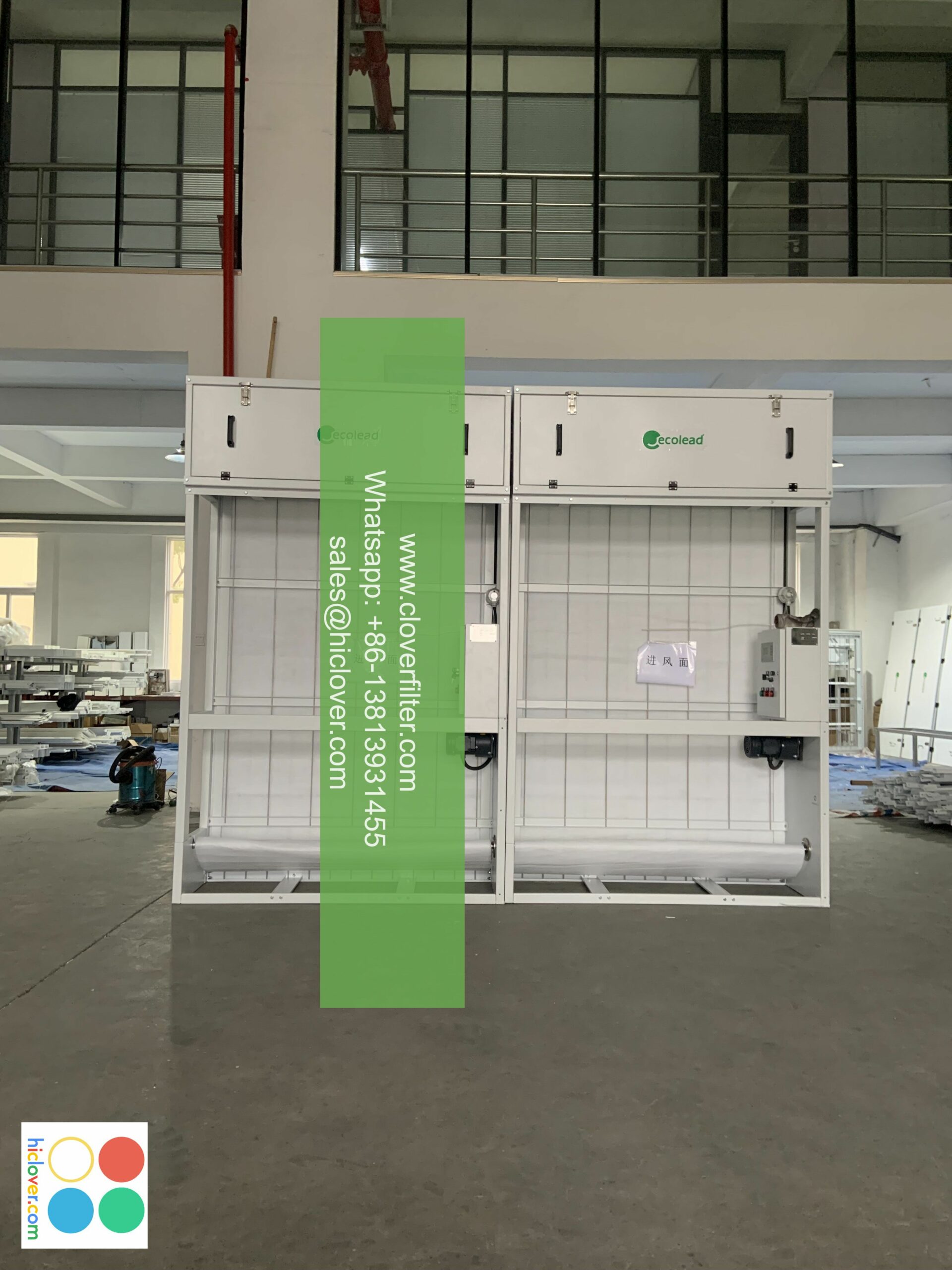
The Automatic Roll Air Filter, available from CloverFilter, utilizes a roll media system that automatically advances based on differential pressure triggers. This allows for consistent, optimal filtration and reduces maintenance needs by ensuring that a clean portion of the filter is always in use. As part of HVAC systems, it can be installed in fresh air intakes or return air systems to provide excellent particulate control.
How It Works
Practical Selection Guide
Choosing the right air filter is crucial for achieving optimal performance in your environment. Here are several key factors to consider:
Comparison of Filter Types
Here is a comparison of the Automatic Roll Air Filter with Bag Filters, Panel Filters, and V-banks:
| Filter Type | Best Use Case | Maintenance | Pressure Drop Behavior | Operating Cost | Typical Risk/Downside |
|---|---|---|---|---|---|
| Automatic Roll Air Filter | High-traffic air handling units | Low (automatic roll) | Consistent, varies with usage | Moderate (energy-saving) | Initial cost may be higher |
| Bag Filter | General industrial applications | Moderate | Moderate, build-up over time | Low to moderate | Requires regular change-outs |
| Panel Filter | Residential & small commercial | Moderate | Steady, increasing | Low | Limited capacity for heavy particles |
| V-bank Filter | Commercial spaces, low profile | Moderate | Low, steady | Moderate | Spatial design limitations |
Common Mistakes & How to Avoid Them
When selecting air filters, here are some common pitfalls to steer clear of:
Real-World Scenarios
To illustrate how different filtration systems impact operations, here are several examples:
Frequently Asked Questions (FAQ)
Q1: What makes HEPA filters different from ULPA filters?
A1: HEPA filters capture 99.97% of particles ≥0.3 microns, while ULPA filters capture 99.999% of particles ≥0.12 microns.
Q2: How does the Automatic Roll Air Filter reduce maintenance?
A2: The roll media system automatically advances to expose clean filter surfaces based on differential pressure, reducing the need for manual replacements.
Q3: In what environments are HEPA filters recommended?
A3: HEPA filters are ideal for cleanrooms, hospitals, and data centers where high air purity is vital.
Q4: Can I use Automatic Roll Air Filters in commercial HVAC systems?
A4: Yes, these filters are well-suited for various commercial applications, especially in systems requiring high-efficiency filtration.
Q5: What should I consider when selecting a filter for my operation?
A5: Consider air quality needs, airflow rates, maintenance costs, and the specific contaminants present in your environment.
Q6: Are filters compliant with standards like ISO 16890?
A6: While the performance can be aligned with ISO 16890 and MERV concepts, specific certification claims should be requested from the manufacturer.
Q7: What impact does filter selection have on energy costs?
A7: Selection impacts energy consumption directly; filters with higher efficiencies can lower overall energy costs due to improved airflow.
Conclusion
When choosing between HEPA and ULPA filters, you must consider your specific application needs, maintenance capabilities, and overall system efficiencies. For those looking for advanced solutions, the Automatic Roll Air Filter from CloverFilter is designed to meet challenging industrial demands while providing significant benefits in energy savings and maintenance reduction. For more information, visit CloverFilter.
Meta Description: Explore HEPA vs. ULPA filters and learn how the Automatic Roll Air Filter from CloverFilter can optimize your HVAC system for enhanced air quality and efficiency.
For assistance in selecting the right filtration solutions, contact CloverFilter at CloverFilter Contact.
It looks like your message might be incomplete. Could you please provide more details or clarify your request? Whether you’re looking for a writing prompt, specific information, or something else, I’d be happy to help!
