How Often Should You Replace Your Air Filter for Optimal Performance?
Key Takeaways:
- Regular filter replacement enhances air filter performance.
- Varying environments dictate different replacement schedules.
- Automatic Roll Air Filters reduce maintenance intervals.
- Monitoring differential pressure can indicate filter condition.
- Compliance with standards like ISO 16890 is valuable.
- Proper selection of filters is crucial for efficiency.
- Consult with experts for tailored solutions.
- Airflow Range: Ensure the filter matches the airflow needs of your system.
- Face Velocity: Select the right face velocity for effective particulate control.
- Media Width/Length: Choose dimensions that fit the specific application.
- Frame Size: Compatibility with existing HVAC infrastructure is crucial.
- Control Options: Determine if automatic or manual controls are suitable.
- Power Supply: Check if the filter requires a dedicated power source.
- Installation Location: Identify whether it will be used for fresh air intake, return, or process air.
- Ignoring Manufacturer Recommendations: Always follow guidelines for filter replacement schedules.
- Overestimating Filter Lifespan: Regularly check differential pressure to avoid premature clogging.
- Neglecting Installation Location: Ensure proper installation to enhance effectiveness.
- Using Incorrect Filter Sizes: Verify dimensions to avoid airflow restrictions.
- Failing to Track Performance Metrics: Keep logs of pressure readings and filter condition.
- Relying Solely on Time for Replacement: Consider both time and pressure for optimal timing.
- Not Consulting Experts: Seek advice from HVAC professionals for tailored solutions.
-
Data Center: A facility manager replaced air filters every three months using CloverFilter’s Automatic Roll Air Filter for consistent performance, reducing incidents of overheating and improving energy efficiency.
-
Battery Factory: In a high-stakes lithium battery plant, adopting automatic roll media helped maintain particulate control, significantly lowering the risk of contamination that could affect production quality.
-
Paint Shop: The implementation of CloverFilter at a paint booth drastically reduced paint particulates in the air, leading to enhanced air quality and compliance with environmental regulations.
-
Textile/Cement Plant: Regular replacement of filters improved operational efficiency and reduced equipment strain, leading to substantial long-term cost savings.
- High Dust Environments (e.g., manufacturing plants): Every 1-2 months.
- Moderate Dust Environments (e.g., commercial spaces): Every 3-6 months.
- Low Dust Environments (e.g., data centers): Every 6 months to 1 year.
Understanding Air Filter Performance

Air filter performance is critical in maintaining air quality and system efficiency, particularly in industrial environments such as factories and data centers. Filters trap particulate matter, enhance airflow, and contribute to energy savings over time. In HVAC systems, regular maintenance and timely replacement of air filters are essential to ensure optimal performance.
What is an Automatic Roll Air Filter?
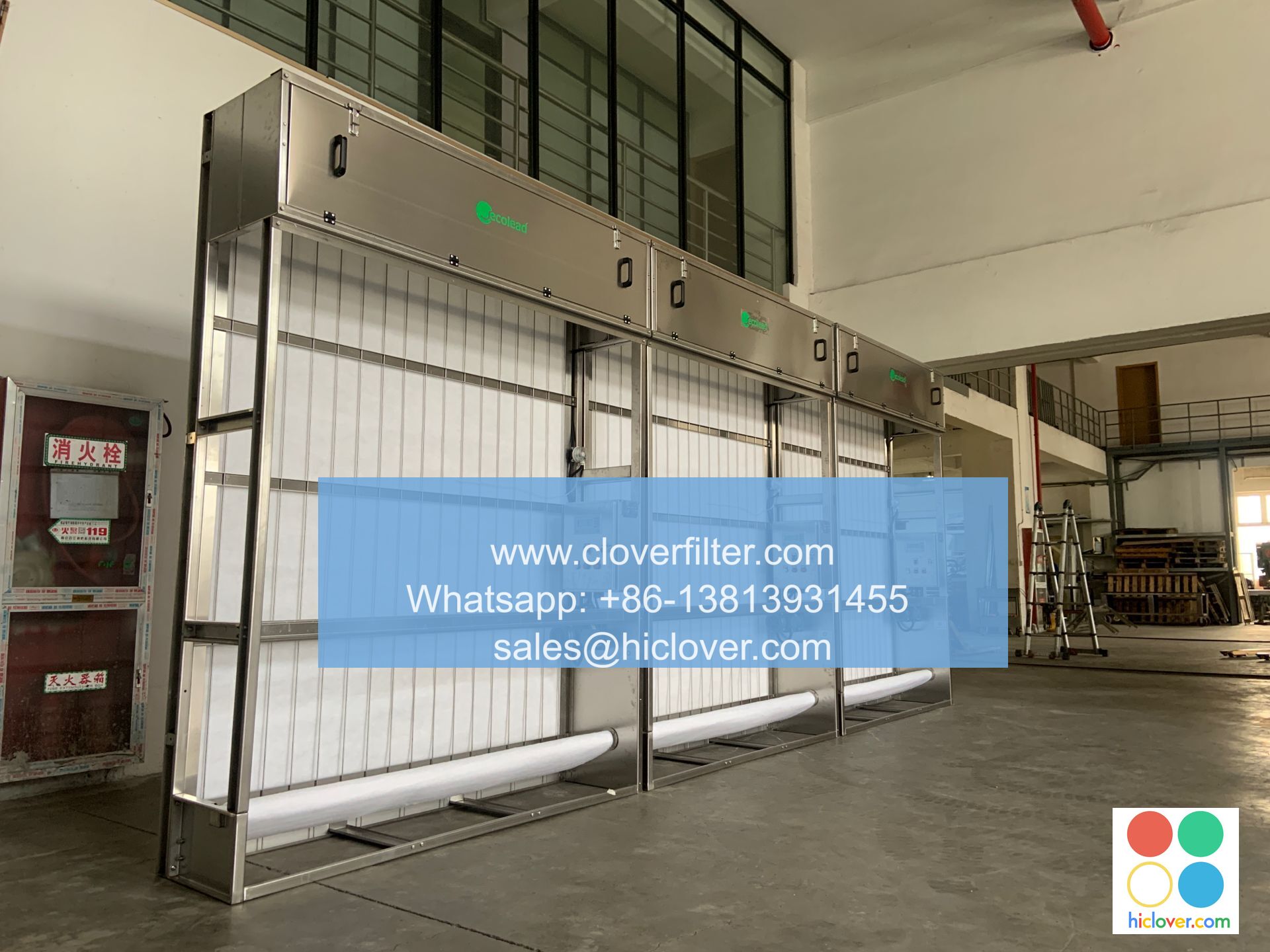
An Automatic Roll Air Filter is a state-of-the-art solution designed for high-performance air filtration in demanding environments. This type of filter works by employing a roll media advancement logic, where the filter media is automatically fed forward. This mechanism is activated by a differential pressure trigger that senses when the filter reaches a certain saturation level, indicating it needs replacement. The timer mode can also be set for periodic replacements regardless of pressure readings.
In HVAC or Air Handling Units (AHUs), these filters are installed at fresh air intakes or return air pathways, providing a continuous supply of clean air while minimizing maintenance efforts. CloverFilter has engineered their Automatic Roll Air Filter to ensure consistent air quality in various applications, from hospitals to lithium battery plants.
Practical Selection Guide for Air Filters
To achieve optimal air filter performance, consider the following factors when selecting an air filter:
Comparing Air Filter Types
| Filter Type | Best Use Case | Maintenance | Pressure Drop Behavior | Operating Cost | Typical Risk/Downside |
|---|---|---|---|---|---|
| Automatic Roll Air Filter | High-volume applications | Low (automated) | Consistent and predictable | Medium to Low | Initial installation cost might be higher |
| Bag Filter | Industrial processes | Moderate | Higher during saturation | Medium | Needs frequent checks |
| Panel Filter | Commercial HVAC | Moderate | Moderate, increases with dirt | Low | Can clog quickly under high loads |
| V-bank Filter | General use | High | Higher pressure drops | High | Requires regular replacement and maintenance |
Common Mistakes & How to Avoid Them
Real-World Scenarios
How Often Should You Replace Your Air Filter?
The frequency of filter replacement is influenced by several factors, including the environment, type of filter used, and specific industry demands. A general guideline is:
Using an Automatic Roll Air Filter from CloverFilter can extend these intervals considerably due to its design and efficiency.
FAQ Section
1. What factors affect air filter performance?
Air quality, loading conditions, and filter type all influence performance.
2. How can I tell when to replace my filter?
Monitoring differential pressure and following a regular maintenance schedule are key indicators.
3. What is the typical lifespan of an Automatic Roll Air Filter?
They generally last longer than traditional filters, often up to a year with proper maintenance.
4. How do I install an Automatic Roll Air Filter?
Installation should be performed according to manufacturer’s guidelines, and consulting an HVAC professional is recommended.
5. Are Automatic Roll Air Filters cost-effective?
Yes, they can reduce energy costs and maintenance efforts over time.
6. Can I use CloverFilter products in any HVAC system?
CloverFilter products are versatile and fit various HVAC and industrial applications, subject to correct selection based on requirements.
7. What compliance standards should I consider?
While specific certifications vary, awareness of standards such as ISO 16890, EN 779, and MERV ratings is important for regulatory compliance.
Conclusion
Maintaining optimal air filter performance is essential in any industrial setting. Choosing the right filter—like the Automatic Roll Air Filter from CloverFilter—can significantly enhance air quality while reducing maintenance efforts. For more information on selecting the best air filtration solutions for your needs, please visit CloverFilter or contact us directly at CloverFilter Contacts.
Meta Description: Discover how often to replace air filters for optimal performance, focusing on energy savings and maintenance reduction in industrial applications.
It seems that you entered “Prompt” without any additional context. How can I assist you with a specific prompt or topic? Please provide more details!
