Investigating the Filter Efficiency of Automatic Roll Air Filters in Lab Settings
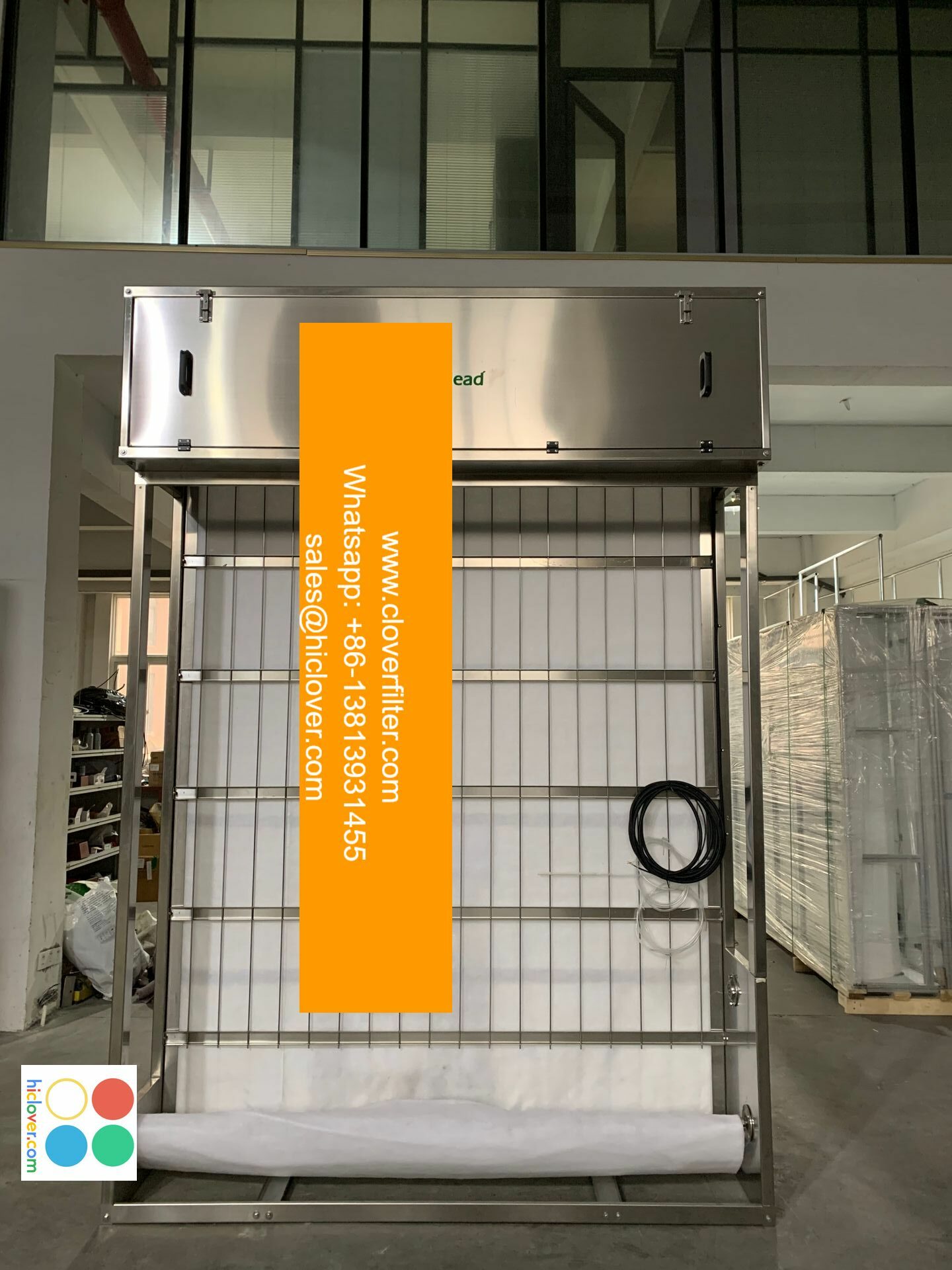
The use of automatic roll air filters in laboratory settings has become increasingly popular due to their ability to provide high-quality air filtration with minimal maintenance. These filters are designed to remove airborne contaminants, such as dust, pollen, and other particles, to create a clean and safe working environment. In this article, we will investigate the filter efficiency of automatic roll air filters in lab settings, highlighting various application areas and discussing the importance of indoor air quality (IAQ) and air filtration systems.
Introduction to Automatic Roll Air Filters
Automatic roll air filters are a type of air purification system that uses a rolling filter media to capture airborne particles. These filters are designed to be highly efficient, with some models capable of removing up to 99.97% of particles as small as 0.3 microns. The rolling filter media is typically made of a synthetic fiber or glass fiber material, which is designed to be durable and long-lasting.
Lab Setting Applications
Automatic roll air filters have a wide range of applications in lab settings, including:
- Biomedical research laboratories: These filters are used to remove airborne contaminants, such as bacteria and viruses, to prevent contamination and ensure accurate research results.
- Pharmaceutical laboratories: Automatic roll air filters are used to remove airborne particles, such as dust and pollen, to prevent contamination and ensure the quality of pharmaceutical products.
- Chemical laboratories: These filters are used to remove airborne chemicals, such as volatile organic compounds (VOCs) and particulate matter (PM), to prevent exposure and ensure a safe working environment.
- Filtration efficiency: The ability of the filter to remove airborne particles, measured in terms of percentage removal or efficiency rating.
- Pressure drop: The decrease in air pressure across the filter, which can affect the overall airflow rate and system performance.
- Filter lifespan: The length of time the filter can be used before it needs to be replaced, which can affect the overall cost of ownership and maintenance requirements.
- Particle counting: The use of particle counters to measure the number of airborne particles before and after filtration.
- Aerosol challenge tests: The use of aerosol generators to create a controlled environment for testing filter efficiency.
- Scanning electron microscopy (SEM): The use of SEM to examine the filter media and measure its porosity and fiber diameter.

Investigating Filter Efficiency
To investigate the filter efficiency of automatic roll air filters in lab settings, several factors must be considered, including:
Testing and Evaluation Methods
To evaluate the filter efficiency of automatic roll air filters, several testing methods can be used, including:
Conclusion
In conclusion, automatic roll air filters are a highly effective solution for providing high-quality air filtration in lab settings. By investigating the filter efficiency of these systems, we can gain a better understanding of their performance and application in various indoor air quality (IAQ) and air filtration systems. Whether used in biomedical research laboratories, pharmaceutical laboratories, or chemical laboratories, automatic roll air filters are an essential component of any air purification system, providing a safe and healthy working environment for laboratory personnel.
