The Role of Air Filter Contact in Indoor Air Pollution Control

Key Takeaways:
- Understanding air filter contact is crucial for effective indoor air quality management.
- Automatic Roll Air Filters utilize roll media to reduce maintenance and operational costs.
- Proper selection based on airflow, pressure drop, and installation location can enhance system performance.
- Compliance with ISO 16890 or MERV standards aids in achieving reliable filtration.
- Knowing common mistakes can lead to better decision-making for procurement managers.
- Real-world case studies demonstrate the efficacy of air filter contact across various industries.
- Airflow Range: Select based on the maximum flow rate your HVAC system can handle.
- Face Velocity: Ensure that this matches the system requirements to avoid excessive pressure drops.
- Media Width/Length: Evaluate space constraints and filter lifespan.
- Frame Size: Choose according to installation point and system compatibility.
- Control Options: Assess whether basic or advanced controls are needed, such as remote monitoring capabilities.
- Power Supply: Confirm compatibility with existing electrical systems.
- Installation Location: Determine if the filter will be placed at fresh air intakes, return systems, or process areas.
- Ignoring compatibility with existing HVAC systems.
- Overlooking airflow requirements leading to reduced system efficiency.
- Failing to consider maintenance schedules, leading to increased costs.
- Choosing filters based on low initial cost without long-term analysis.
- Not consulting technical specifications for proper installation.
- Neglecting the importance of differential pressure monitoring.
- Failing to arrange for inevitable media advancements with airtight seals.
- Assuming all filters perform equivalently without considering MERV ratings.
- Disregarding manufacturer support for installation and maintenance issues.
- Not assessing the operational environment’s unique particulate characteristics.

What is an Automatic Roll Air Filter?
An Automatic Roll Air Filter is designed to provide continuous filtration in HVAC and AHU systems, utilizing a roll media advance mechanism. Unlike traditional static filters, this system deploys a new section of filter media automatically as the previously used section becomes saturated with particulates. The roll filter’s operation is triggered by differential pressure measurements that indicate when the filter is nearing its load capacity. This innovative functionality not only ensures optimal air purity but also significantly reduces maintenance frequency.
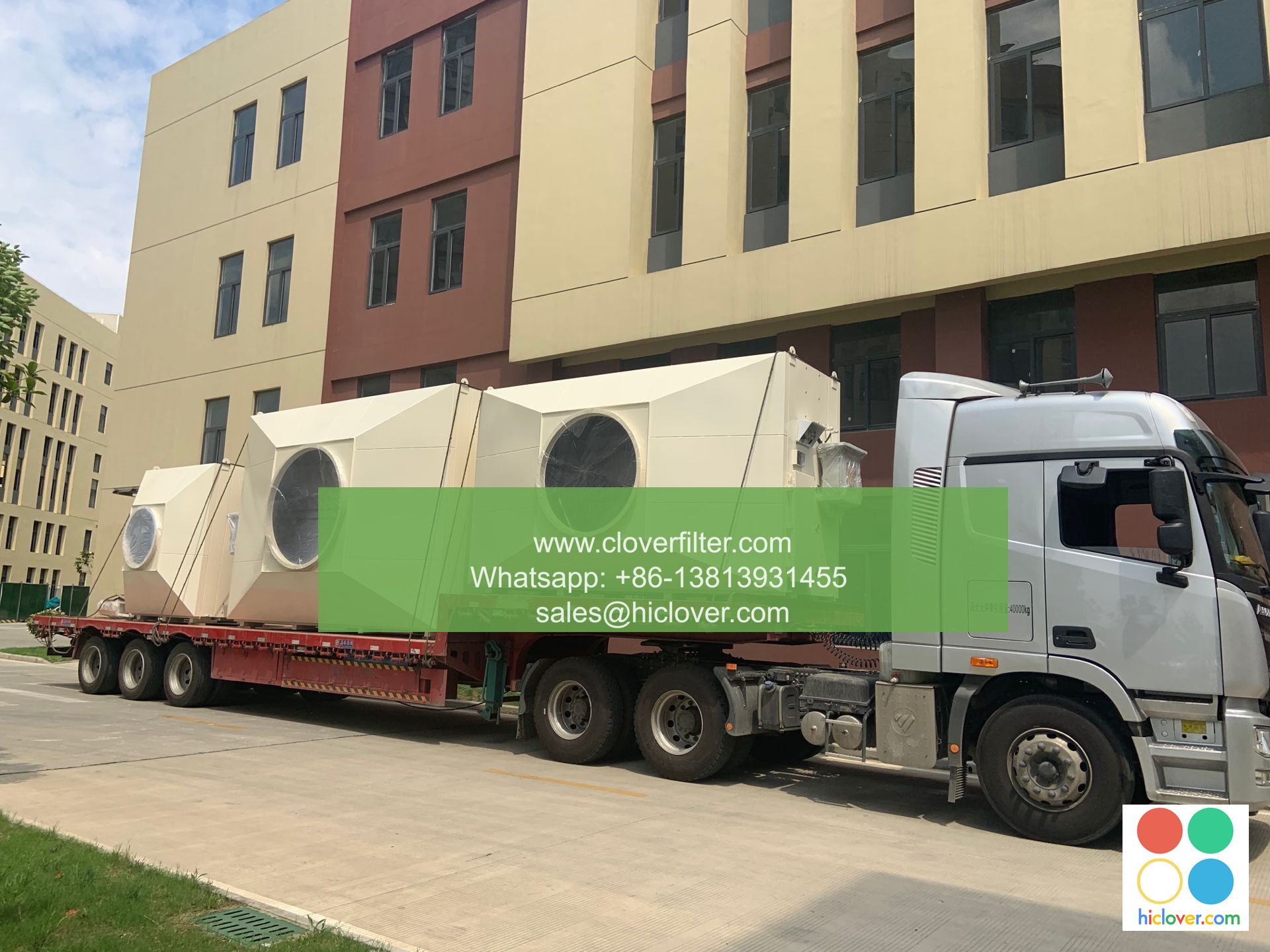
In corporate and industrial settings, where air quality is paramount—ranging from factories to cleanrooms—the Automatic Roll Air Filter remains a vital component for maintaining safe environments. CloverFilter offers solutions that integrate seamlessly into fresh air intakes, return air, and process air applications for enhanced functionality.
Understanding Air Filter Contact
Air filter contact refers to the interaction between air flowing through a filter and the filter media itself. This contact is crucial for the effective capture of airborne pollutants. Filters with optimal contact ensure maximum particle removal by efficiently utilizing the surface area of the media, leading to improved air quality. The effectiveness of any air filtration system hinges on this principle, making it essential for industrial air filtration buyers to grasp its significance.
How Automatic Roll Air Filters Work
Roll Media Advance Logic
The Automatic Roll Air Filter employs a roll media that advances as the material becomes loaded with dust and particulates. Sensors detect the pressure drop across the filter media, providing real-time feedback to the system. When the pressure difference exceeds a predefined threshold, the roll advances, exposing a fresh section of media to incoming air. This system embodies efficiency as it maximizes filter life.
Differential Pressure Trigger
Incorporating differential pressure technology is critical for maintaining air quality. This mechanism allows for automated operation, ensuring that filters are only replaced when necessary, thus minimizing waste and reducing operational costs associated with premature filter changes.
Timer Mode for Consistent Performance
Some Automatic Roll Air Filters can be programmed for time-based operation, advancing the media after a set interval, regardless of pressure readings. This adds an extra layer of reliability, particularly in environments with consistent air quality demands such as hospitals and data centers.
Practical Selection Guide for Automatic Roll Air Filters
When choosing an Automatic Roll Air Filter, consider the following parameters:
Comparison of Filter Types
| Filter Type | Best Use Case | Maintenance | Pressure Drop Behavior | Operating Cost | Typical Risk/Downside |
|---|---|---|---|---|---|
| Automatic Roll Air Filter | Continuous high-volume air purification | Low, due to roll media | Low, consistent with pressure readings | Moderate, with long-term savings | Initial cost may be higher |
| Bag Filter | Large particles in industrial applications | Moderate, depending on dirt loading | Moderate, increases with usage | Low to moderate | Longer downtime during changes |
| Panel Filter | General HVAC applications | High, frequent changes | Variable, higher with dirt accumulation | Low | Short lifespan under high dirt loads |
| V-Bank | Compact spaces needing high efficiency | Moderate to high | Moderate to high variations | Moderate | Risk of uneven airflow distribution |
Common Mistakes & How to Avoid Them
Real-World Scenarios
Data Center
In a data center, maintaining low dust levels is vital for equipment longevity. Using CloverFilter’s Automatic Roll Air Filter, facilities have reported a significant reduction in system downtime due to fewer filter changes, achieving compliance with stringent air quality regulations.
Lithium Battery Factory
Lithium battery production requires highly contaminant-free environments. By implementing Automatic Roll Air Filters, these facilities can effectively manage the airborne particulates that can affect product quality, resulting in improved manufacturing yields.
Paint Shop
In paint shops, volatile organic compounds (VOCs) and paint particles create specific filtration challenges. The CLoverFilter Automatic Roll Air Filter has been instrumental in maintaining clear air quality while reducing flammability risks associated with traditional filtration systems.
Textile and Steel/Cement Plants
In both textile and steel/cement industries, where dust yields high emissions, adopting Automatic Roll Air Filters has shown to decrease maintenance and operational costs significantly while enhancing overall workplace safety.
Conclusion
Understanding the role of air filter contact in indoor air pollution control—especially with products like the Automatic Roll Air Filter from CloverFilter—can transform an organization’s approach to maintaining air quality. By focusing on careful selection, avoiding common pitfalls, and learning from real-world applications, industrial air filtration buyers can make informed choices that enhance operational efficiency and comply with necessary standards.
Meta Description: Discover the importance of air filter contact in combating indoor air pollution with CloverFilter’s Automatic Roll Air Filters for your industrial needs.
For more information on air filtration solutions and to get in touch with CloverFilter, visit CloverFilter Contact.
It seems like you might be looking for a prompt for writing, discussion, or a creative project. Could you specify the type of prompt you need? For example, are you looking for a writing prompt, an art prompt, or something else entirely? Let me know, and I’ll be happy to help!
