The Science Behind Air Filter Tools: How They Work

Key Takeaways
- Air filter tools are essential for maintaining air quality in various industrial settings.
- The Automatic Roll Air Filter utilizes roll media and differential pressure to optimize performance.
- Proper selection of air filter tools can reduce maintenance costs and improve energy efficiency.
- Compliance with standards like ISO 16890 helps ensure effective particulate control.
- Real-world applications of air filter tools demonstrate their versatility and efficiency.
- Roll Media Advance Logic: This system continuously pulls fresh media from a roll as it becomes dirty.
- Differential Pressure Trigger: This feature monitors the pressure drop across the filter; when the pressure differential reaches a set point, the system knows it’s time to advance to a new section of the filter media.
- Timer Mode: Automatic timers can be programmed to change the filter on a schedule, further ensuring optimal performance.
- Airflow Range: Ensure the filter can accommodate the expected airflow in your facility.
- Face Velocity: Identify the appropriate face velocity that aligns with your operational needs.
- Media Width/Length: Dimensions of the media roll should fit within your existing framework.
- Frame Size: Ensure compatibility with the existing HVAC/AHU infrastructure.
- Control Options: Look for filters that offer automated or manual control options for flexibility.
- Power Supply: Confirm the power supply specifications to avoid installation issues.
- Installation Location: Determine if the filter will be used for fresh air intake, return air, or process air applications.
- Choosing the wrong filter size: Always measure existing filters to ensure proper fit.
- Ignoring airflow requirements: Select filters that match your facility’s airflow specifications.
- Neglecting maintenance schedules: Automate your system to keep track of filter changes.
- Disregarding pressure drop considerations: Understand the implications of pressure drops on system performance.
- Overlooking compatibility: Ensure that the new filter is compatible with existing AHU frameworks.
- Failing to train staff: Provide adequate training for personnel on filter management and monitoring.
- Not consulting with experts: Always seek advice from filtration specialists to optimize your setup.
-
Data Center: In a data center, maintaining optimal air quality is crucial for equipment longevity. The use of CloverFilter’s Automatic Roll Air Filter ensures continuous airflow without frequent manual changes, keeping server rooms cool and operational.
-
Battery Factory: At a lithium battery plant, particulate control is critical to meet safety standards. The advanced roll media technology of the Automatic Roll Air Filter provides reliable filtration while minimizing the risk of contamination during the manufacturing process.
-
Paint Shop: In a paint booth, volatile organic compounds (VOCs) can compromise air quality and worker safety. The Automatic Roll Air Filter effectively manages odors and dust, allowing for safer work conditions while ensuring compliance with environmental standards.
-
Textile & Cement Plants: In textile mills and cement factories, air quality standards are essential for worker health and product quality. Implementing the CloverFilter Automatic Roll Air Filter helps control particulates, improving overall air quality and operational efficiency.
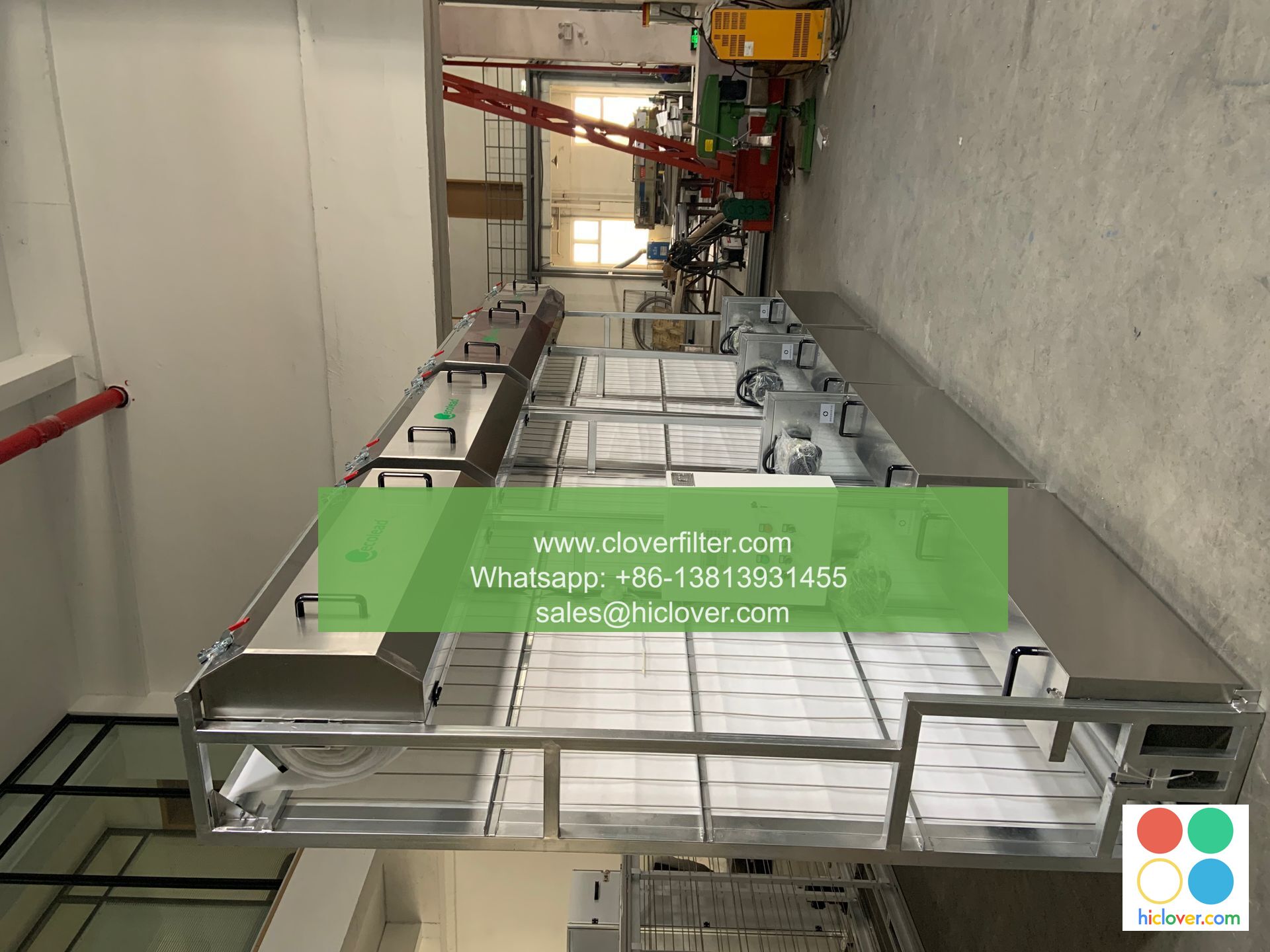
Understanding Air Filter Tools
Air filter tools are critical components in HVAC systems, designed to improve air quality by trapping pollutants, allergens, and particulate matter. They play a vital role in various environments, including factories, cleanrooms, and hospitals. Among these tools, the Automatic Roll Air Filter stands out due to its innovative features that enhance air filtration efficiency and maintenance flexibility.
What is an Automatic Roll Air Filter?

An Automatic Roll Air Filter is a specialized air filtration system designed to replace traditional filters with a continuous roll of filter media. This design allows it to advance automatically based on predetermined criteria. The roll media advance logic operates synchronously with a differential pressure trigger, ensuring that the filter is changed out before performance declines significantly. This kind of air filter tool is an excellent choice for locations requiring consistent air quality, such as data centers and battery factories.
How Do Automatic Roll Air Filters Work?
The functioning of an Automatic Roll Air Filter involves several key mechanisms:
This interplay between different mechanisms ensures that the air handling unit (AHU) remains effective, promoting fresh air intake while minimizing downtime for maintenance.
Key Specifications for Selection
When selecting air filter tools like the Automatic Roll Air Filter, consider the following specifications:
Comparison of Filter Types
| Filter Type | Best Use Case | Maintenance | Pressure Drop Behavior | Operating Cost | Typical Risk/Downside |
|---|---|---|---|---|---|
| Automatic Roll Air Filter | High dust load environments | Low due to automated changes | Stable under normal conditions | Moderate, energy-saving | Initial setup complexity |
| Bag Filter | General HVAC systems | Moderate | Can increase with dust accumulation | Lower than panel filters | Can be heavy, takes up space |
| Panel Filter | Light-duty use | High | Increases linearly with dirt buildup | Low | Frequent replacement needed |
| V-bank | High airflow needs | Moderate | Moderate | Low | Risk of less effective capture |
Common Mistakes & How to Avoid Them
Real-World Scenarios
Frequently Asked Questions
1. What is the lifespan of an Automatic Roll Air Filter?
The lifespan can vary, but regular monitoring and scheduled changes typically extend the filter’s effectiveness for several months.
2. Can I use different media types in these filters?
Yes, depending on your needs, various types of media can be utilized to enhance filtration for specific contaminants.
3. Are Automatic Roll Air Filters energy efficient?
Yes, they can lead to energy savings by optimizing airflow and reducing the frequency of manual filter changes.
4. How do I know when to replace the roll media?
Using differential pressure gauges will help determine the ideal time for a media change.
5. Can these filters be integrated into existing HVAC systems?
Absolutely, the design allows for easy integration into most standard AHU systems.
6. What maintenance practices are recommended?
Routine performance checks and adherence to a maintenance schedule are essential for optimal function.
Conclusion
Selecting the right air filter tools is crucial for maintaining air cleanliness and operational efficiency across various industrial applications. The Automatic Roll Air Filter by CloverFilter is a state-of-the-art solution that addresses many common filtration challenges. For more information on how CloverFilter can improve air quality in your facility, reach out via CloverFilter Contact.
Meta Description: Explore the science of air filter tools, including the functionality of Automatic Roll Air Filters, and learn how to optimize HVAC performance in industrial settings.
It looks like you entered “Prompt” without any additional details. How can I assist you today? If you have a specific question or topic in mind, feel free to share!
