Understanding MERV Ratings and Their Impact on Compliance

Key Takeaways:
- MERV ratings indicate the effectiveness of air filters in capturing particulates.
- Air filter compliance is crucial for industries like hospitals, data centers, and manufacturing.
- The Automatic Roll Air Filter offers innovative technology for efficient filtration and reduced maintenance.
- Understanding the specifications like airflow, face velocity, and media dimensions is vital for selecting the right filter.
- Be aware of common mistakes in filter selection to avoid operational setbacks.
- Real-world applications showcase the versatility of air filters across various sectors.
- Fresh air intake: Filtering outdoor air before it mixes with recirculated indoor air.
- Return air: Cleaning returning indoor air before it is recirculated.
- Process air: Maintaining cleanliness in manufacturing environments where air quality is critical.
- Airflow Range: Match the filter capacity with your facility’s total airflow requirements.
- Face Velocity: Ensure the filter maintains an adequate face velocity to optimize filtration without excessive energy consumption.
- Media Width/Length: Custom sizes can impact the filter’s efficacy and compatibility with existing systems.
- Frame Size: Ensure that the filter fits securely in its designated housing.
- Control Options: Look for filters that offer automated monitoring and adjustment capabilities, reducing manual oversight.
- Power Supply: Assess whether the system requires a dedicated power supply for its management systems.
- Installation Location: Decide if the filter will be used in fresh air intake, return air, or specific process applications based on your facility’s needs.
- Choosing a filter without considering airflow requirements of the system.
- Ignoring face velocity specifications; high velocities can lead to premature damage.
- Failing to regularly monitor differential pressure, leading to system inefficiencies.
- Selecting filters solely based on initial cost rather than total lifecycle expenses.
- Overlooking the media dimensions that do not fit existing frame sizes.
- Assuming compliance without verifying the specific certifications of the filters.
- Neglecting installation location which can impact filter performance.
- Skipping preventative maintenance, which can lead to increased energy bills.

What are MERV Ratings?
Minimum Efficiency Reporting Value (MERV) ratings are a standard metric used to determine the effectiveness of air filters at removing particles from the air. This rating helps procurement managers and facility managers ensure that their air filtration systems meet industry-specific standards for air quality and compliance. Filters are rated on a scale from 1 to 20, with higher numbers representing a greater ability to capture smaller particles. Selecting filters with these ratings is essential for achieving air filter compliance in areas with strict regulations.
Understanding Air Filter Compliance
Air filter compliance is crucial for organizations that must adhere to regulations governing air quality, particularly in industries like healthcare, manufacturing, and data centers. Compliance helps mitigate health risks and optimize operational efficacy. Filters must not only meet MERV standards but also adhere to ISO 16890 for particulate control. While the MERV concept has historical significance, it should be considered alongside contemporary standards like ISO 16890 and European EN 779. Always inquire about certifications available on request when choosing filters, as they can significantly impact compliance and operational integrity.
The Automatic Roll Air Filter
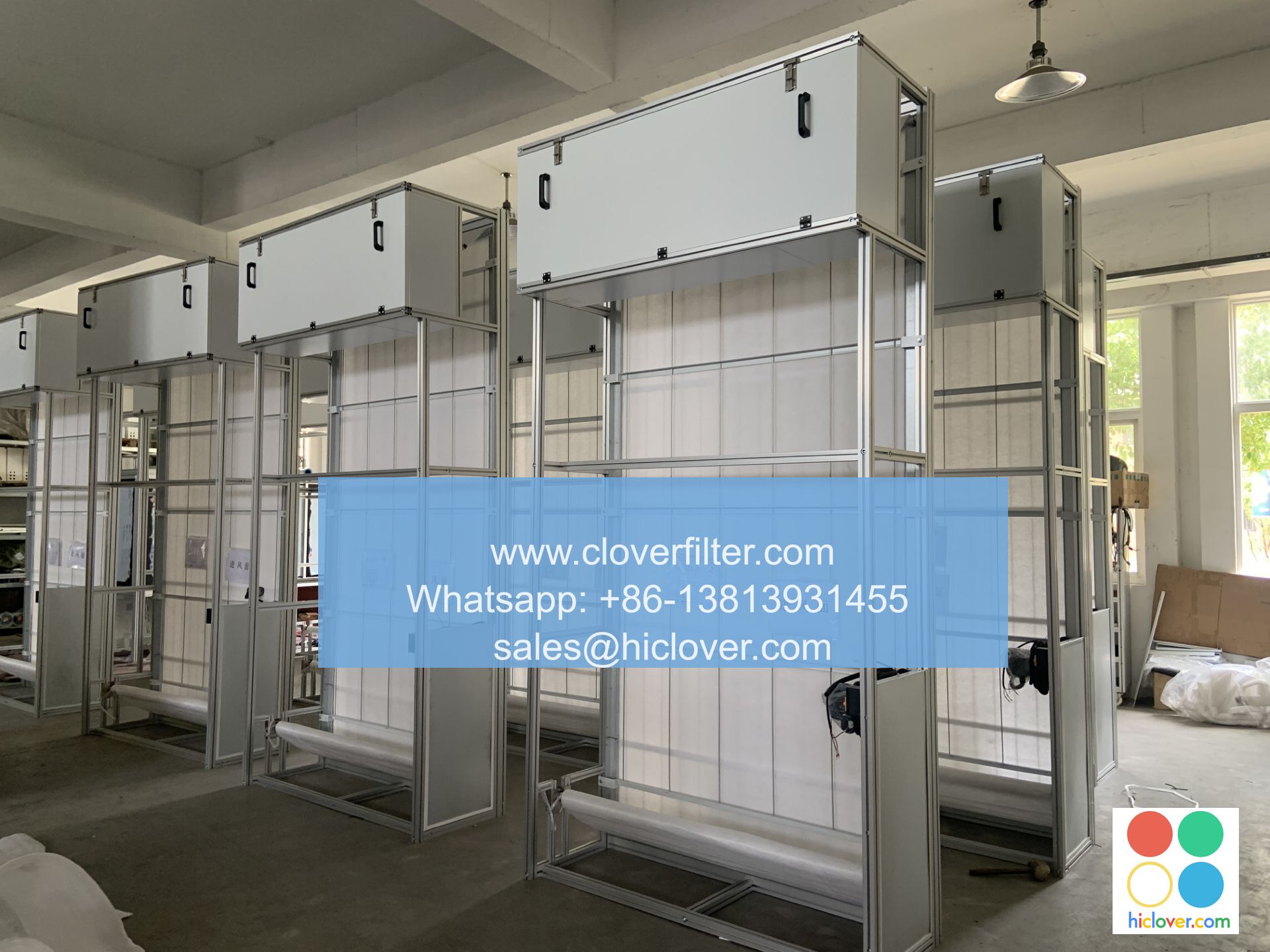
The Automatic Roll Air Filter is an advanced filtration solution with a unique roll media design that enhances efficiency and maintenance. It uses roll media advance logic, activating a differential pressure trigger that indicates when the filter media needs replacing. This means that rather than manual changes based on set timelines, the filter uses sensors and timer mode to prompt maintenance only when necessary. This capability ensures optimal performance and significantly reduces downtime.
How It Fits in HVAC/AHU Systems
The Automatic Roll Air Filter seamlessly integrates into HVAC systems, particularly in air handling units (AHUs). It serves multiple purposes, including:
Selection Guide for Automatic Roll Air Filters
When choosing an Automatic Roll Air Filter, consider the following specifications:
Comparison Table: Filter Types
| Filter Type | Best Use Case | Maintenance | Pressure Drop Behavior | Operating Cost | Typical Risk/Downside |
|---|---|---|---|---|---|
| Automatic Roll Air Filter | High-demand environments | Low | Consistent | Moderate to Low | Limited to specific designs |
| Bag Filter | General manufacturing | Moderate | Variable | Moderate | Requires larger space |
| Panel Filter | Standard HVAC applications | High | Low to Moderate | High | Frequent replacements |
| V-bank | Air applications with limited space | Moderate to Low | High during clogs | Low | Potential for high drop |
Common Mistakes & How to Avoid Them
Real-World Scenarios
Data Center
In a large data center, the Automatic Roll Air Filter was installed at the fresh air intake. The roll media design optimized airflow while reducing energy consumption by adapting to changes in particulate load. This resulted in significant cost savings while maintaining high air quality standards.
Lithium Battery Factory
A lithium battery manufacturing facility opted for the Automatic Roll Air Filter in its production area, enabling particulate control that met ISO 16890 standards. The facility benefited from reduced maintenance downtime, ensuring uninterrupted production.
Paint Shop
In a busy paint shop, air quality is critical for product integrity. The Automatic Roll Air Filter provided efficient filtration, minimizing harmful vapors while maintaining compliance with VOC regulations. Its low maintenance requirements allowed for a cleaner workspace.
Textile/Cement Plant
A textile mill struggling with dust produced by manufacturing processes implemented the Automatic Roll Air Filter system. The filter successfully captured fine particles, enhancing air quality and worker safety while complying with local air quality regulations.
Conclusion
Understanding MERV ratings and the importance of air filter compliance is essential for any procurement manager or HVAC engineer in industries where air quality is critical. The Automatic Roll Air Filter by CloverFilter is a practical solution that meets these needs with sophisticated technology and ease of maintenance. By considering factors such as airflow, media size, and monitoring capabilities, you can secure a filtration solution that meets compliance and enhances operational efficiency.
Meta Description: Discover MERV ratings’ role in air filter compliance and learn how CloverFilter’s Automatic Roll Air Filters can optimize air quality in your industry.
For more details about the Automatic Roll Air Filter and how it can benefit your facility, reach out to CloverFilter today at https://www.cloverfilter.com/contact/.
It looks like your message was cut off. Could you provide more details or clarify what you’d like assistance with? I’m here to help!
